Advertising & Paid Media
Top Advertising Agency in India for Organic Growth-Focused Brands
Discover how a top advertising agency in India combines paid advertising, performance marketing, SEO, and organic growth strategies to drive qualified leads, improve conversions, and build sustainable business growth.
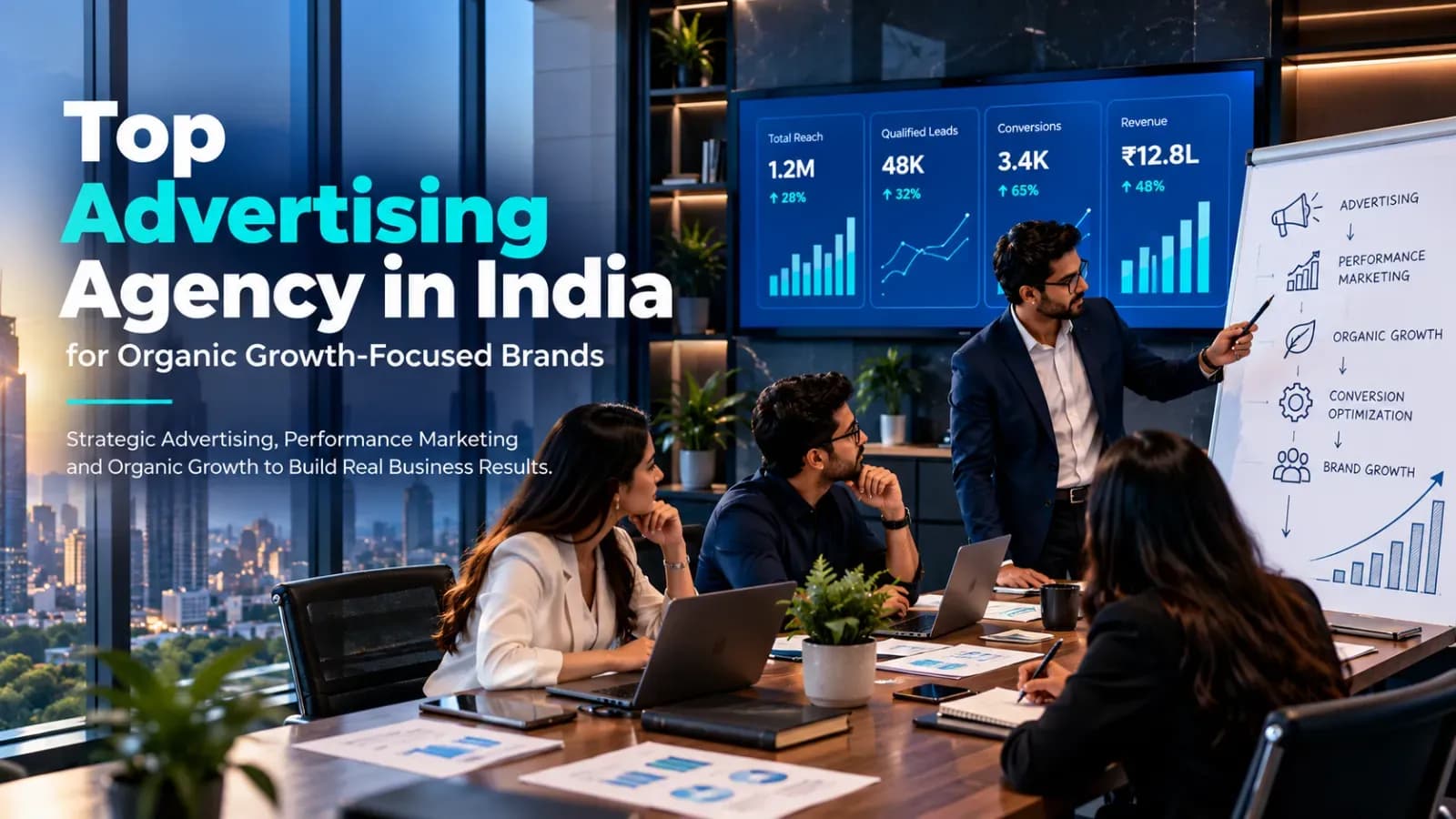
AI is changing how consumers discover, compare, and choose brands. Traditional advertising alone is no longer enough when customer journeys move across search engines, social platforms, marketplaces, and AI-powered discovery tools.
A top advertising agency in India helps brands respond with deeper audience insight, integrated campaigns, and continuous optimization. The objective is not simply to generate clicks, but to turn attention into measurable growth.
Indian advertising Industry estimates place India's 2025 advertising market between ₹1.21 lakh crore and ₹1.85 lakh crore, depending on reporting scope and methodology. Digital media accounted for an estimated 44% to 59% of total spending, according to reports covered by Dentsu, WPP, and Ipsos.
This shift creates opportunity while making consumer attention more competitive. Brands need partners that combine creativity, audience intelligence, technology, and commercial judgment to convert budgets into meaningful returns.
This article explains advertising, paid and organic growth, campaign quality, practical budgets, and the KPIs that reveal an agency's real contribution.
What Does Advertising Actually Mean?
Advertising is the paid promotion of a product, service, or brand to a defined audience. A business pays a media provider to distribute its message and influence awareness, leads, or sales.
But buying media space is only one part of the job. Effective advertising requires a clear objective, a relevant audience, a strong offer, persuasive creative, a suitable channel, and a conversion journey that works after someone clicks.
This is why a campaign can produce thousands of impressions and still fail commercially. If the message attracts the wrong people, the landing page creates friction, or the sales team responds too slowly, increased traffic simply exposes a weak system.
Advertising, Performance Marketing, and Digital Marketing
Business owners often use these terms interchangeably, although they describe different parts of growth.
Paid advertising includes Google, Meta, LinkedIn, YouTube, display, sponsored-content, and marketplace campaigns. It provides immediate reach, but visibility normally declines when spending stops.
Performance marketing is paid marketing optimized around measurable actions such as qualified leads, purchases, app installations, or booked consultations. It emphasizes outcomes such as cost per lead, customer acquisition cost, and return on ad spend.
Organic marketing develops visibility without paying a platform for every visit. SEO, useful content, local search optimization, organic social media, digital PR, relevant backlinks, and guest posting can all contribute to long-term discovery and authority.
SEO and guest posting should not technically be called "organic advertising." They are organic marketing methods. Digital marketing is the wider system that connects paid media, organic visibility, content, email, analytics, automation, and conversion optimization.
Paid Growth vs. Organic Growth
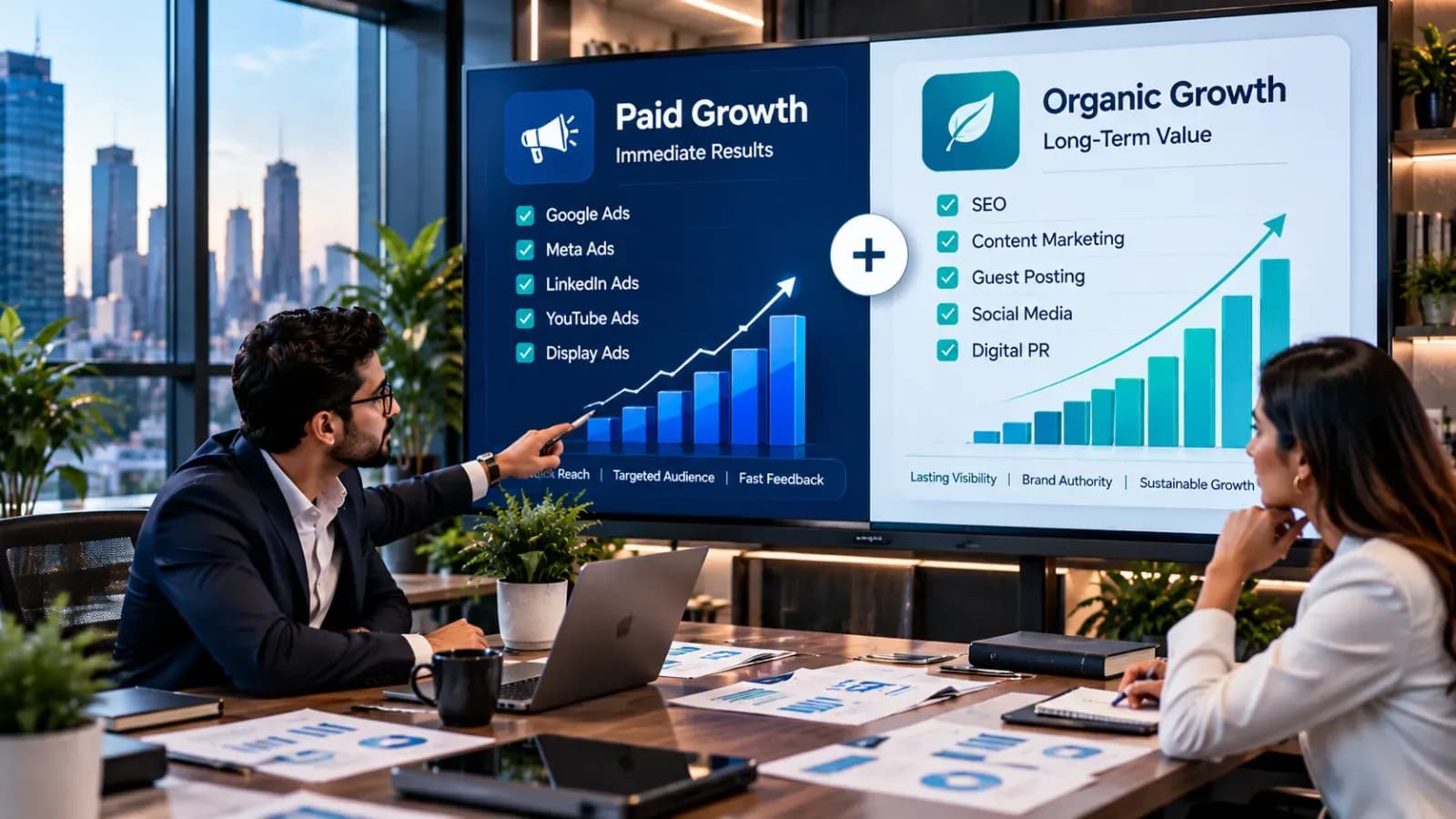
Paid campaigns are useful when a business needs traffic quickly, wants to validate an offer, or must reach a narrowly defined audience. They also generate fast feedback about keywords, messages, audiences, and products.
Organic marketing takes longer because authority must be earned. However, useful content and a strong search presence can keep attracting relevant visitors after the original work is complete.
The right question is therefore not, "Which one is better?" It is, "Which combination matches our goals, timeline, margins, and current stage?" Paid media can create immediate demand while organic marketing builds a more durable source of discovery.
What Makes Advertising Good?
Good advertising begins with a commercial outcome, not a platform. Before launching a campaign, a business should know what it wants people to do and what that action is worth.
Five elements shape performance:
- Audience: The campaign reaches people with the right need, intent, location, and buying capacity.
- Offer: The value is relevant, specific, and strong enough to motivate action.
- Message: The creative explains the problem, benefit, and next step without unnecessary complexity.
- Conversion experience: The landing page is fast, trustworthy, mobile-friendly, and consistent with the advertisement.
- Measurement: Tracking connects spending with qualified leads, sales, revenue, and customer value.
An agency should test these elements continuously rather than blaming the advertising platform whenever results weaken.
There is no universal minimum budget that guarantees results. Competition, geography, product value, sales cycle, channel costs, and conversion rates all affect how much a business needs to test.
The following figures are practical planning ranges for , not guaranteed benchmarks:
Business stage | Monthly paid-media test budget | Monthly organic growth investment |
Local or micro business | ₹25,000-₹60,000 | ₹20,000-₹40,000 |
Startup or small business | ₹60,000-₹1.5 lakh | ₹40,000-₹80,000 |
Growing SME | ₹1.5 lakh-₹5 lakh | ₹75,000-₹2 lakh |
Mid-sized or large enterprise | ₹5 lakh and above | ₹2 lakh and above |
Paid-media budgets usually refer only to money placed on advertising platforms. Agency fees, creative production, landing-page development, tracking tools, and applicable taxes should be calculated separately.
A smaller business should not spread a limited budget across every channel. One clear offer, audience, and suitable channel can produce better learning than several underfunded campaigns.
Choosing Channels According to the Business
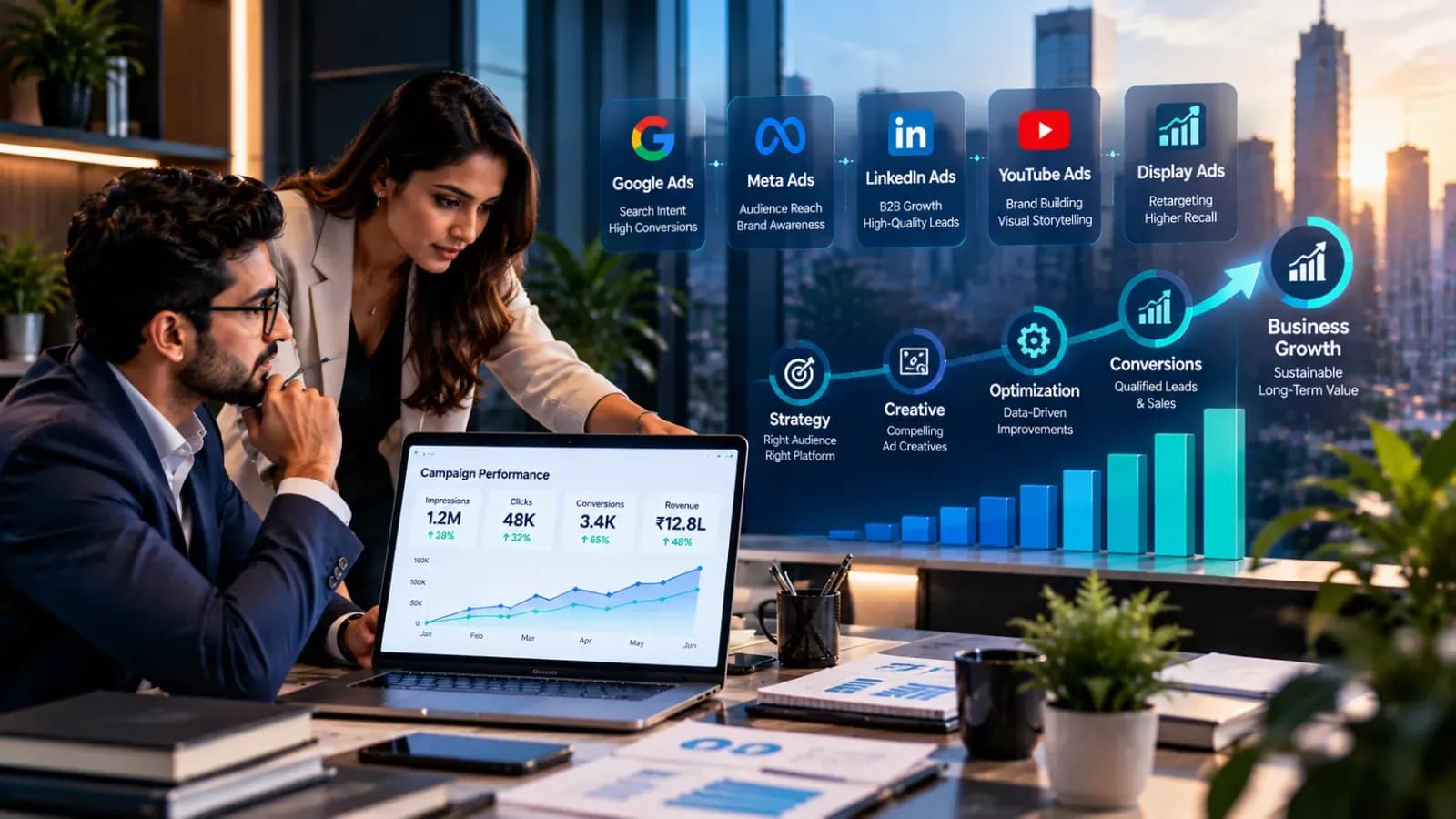
A local service provider may benefit from Google Search Ads, local SEO, reviews, and a well-maintained Google Business Profile. These channels help capture customers already searching for a nearby solution.
An e-commerce brand may combine Google Shopping Ads, Meta Ads campaigns, retargeting, product SEO, creator content, and email automation. Here, product margins, repeat-purchase rate, and average order value should guide acquisition spending.
A B2B company may need Google Search, LinkedIn, case studies, guest posting, and lead nurturing. Success should be measured through qualified opportunities and revenue—not form submissions alone.
KPIs That Reveal Real Performance
Clicks and impressions show activity, but they do not prove growth. The appropriate KPI depends on the campaign objective.
Awareness campaigns can be evaluated through reach, frequency, cost per thousand impressions, video completion, and branded-search growth. Lead-generation campaigns require cost per lead, qualified-lead rate, appointment rate, and sales conversion data.
For revenue campaigns, businesses should monitor conversion rate, customer acquisition cost, return on ad spend, contribution margin, and customer lifetime value. Organic performance should connect rankings and traffic with enquiries, assisted conversions, and revenue.
How AI Improves Advertising Without Replacing Strategy
AI can accelerate research, creative variation, bidding, lead scoring, monitoring, and analysis. It identifies patterns faster, but cannot rescue an irrelevant offer or broken customer experience.
Strong agencies use AI to improve human decisions. They validate automated recommendations against business margins, customer quality, brand positioning, and sales feedback instead of allowing platforms to optimize toward superficial numbers.
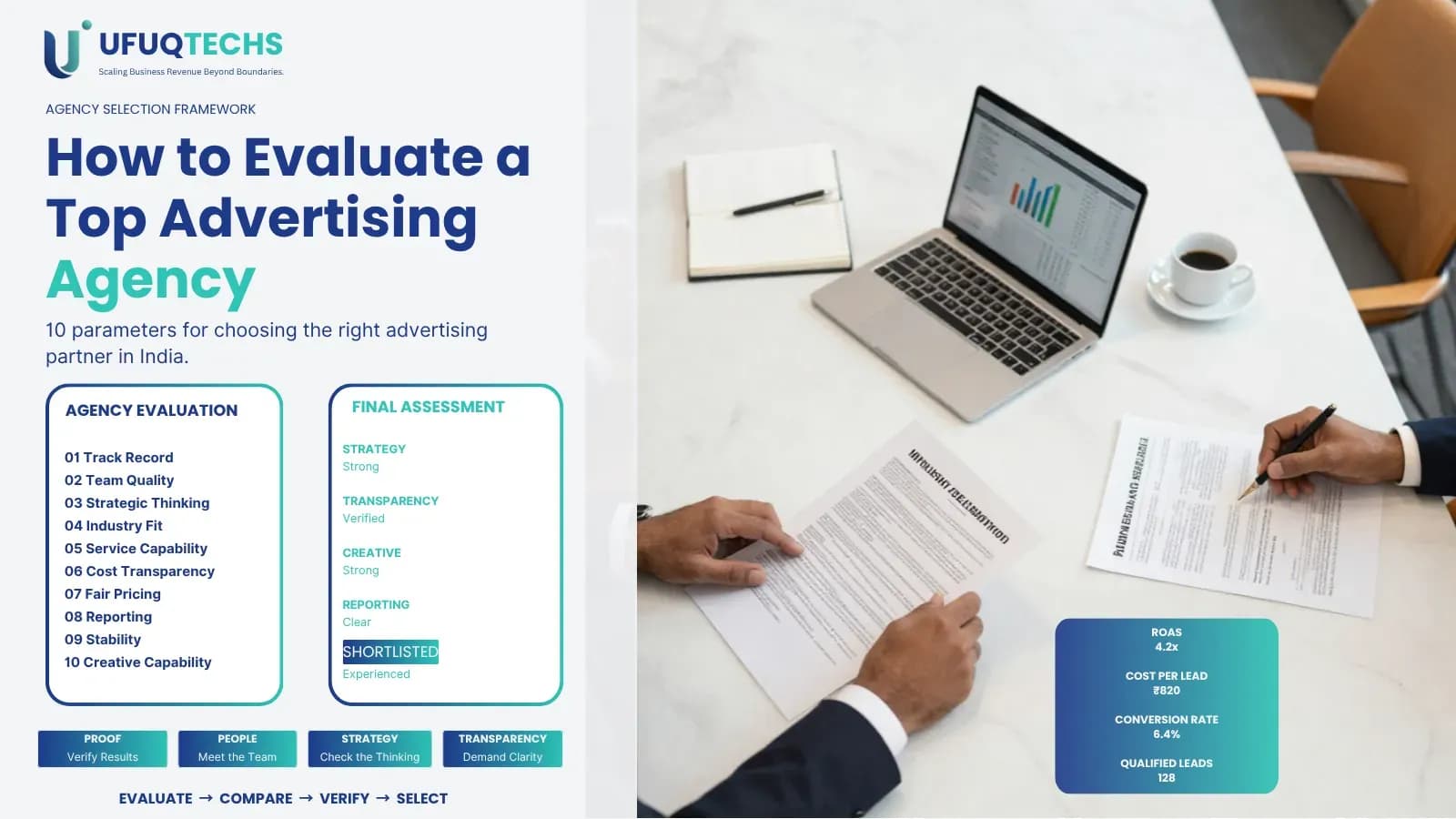
How to Evaluate a Top Advertising Agency in India

Look beyond awards, follower counts, and promises. Ask a top advertising agency India to explain how it defines success, separates media spend from service fees, tracks conversions, reports qualified outcomes, and protects your ownership of advertising accounts and data.
Relevant case studies matter, but context matters more. A strong result in one industry does not automatically transfer to another with different margins, demand patterns, regulations, or sales cycles.
The right advertising agency partner should also understand when advertising is not the complete answer. An integrated recommendation may include SEO, content, landing-page improvements, CRM automation, or sales-process changes alongside paid campaigns.
Final Takeaway
Sustainable growth rarely comes from choosing paid advertising or organic marketing in isolation. It comes from understanding the role of each channel and building a system in which short-term demand supports long-term authority.
The best advertising agencies in India do not begin by defending their service fees or pushing businesses toward larger budgets. They first investigate the company’s goals, customers, competition, margins, existing performance, and capacity to convert new opportunities.
Only then should an advertising agency structure campaigns, analyze predictive keyword data and search intent, select suitable channels, and establish realistic performance expectations. The real value of an advertising partner is not how much money it can spend, it is how intelligently it can connect every investment with a measurable business outcome.
Frequently Asked Questions
Is paid advertising the same as performance marketing?
Not exactly. Paid advertising purchases reach, while performance marketing is managed and measured around defined outcomes such as leads, purchases, or booked appointments.
Are SEO, backlinks, and guest posts forms of advertising?
They are better classified as organic marketing. When used responsibly, they can improve authority, referral traffic, search visibility, and brand discovery over time.
Should a small business choose paid or organic marketing first?
The answer depends on urgency and resources. Paid media can test demand quickly, while organic marketing builds durable visibility; many businesses benefit from starting with a focused paid test and a consistent organic foundation.
How much do advertising agencies charge in India?
Advertising agencies in India commonly charge ₹25,000 to ₹2 lakh or more per month, depending on the services, campaign complexity, and business size. Paid-media agencies may charge 10%–20% of ad spend, while advertising budgets, creative production, tools, and taxes are usually billed separately.
Can paid advertising and SEO work together?
Yes. Paid campaigns generate immediate visibility and audience data, while SEO builds sustainable organic authority. Together, they can reduce long-term acquisition dependence and support consistent