AI Automation
AI Automation: How Businesses Can Work Smarter and Grow Faster
Your team is busy all day, but the same repetitive work keeps coming back. What if technology could handle that work automatically—while your team focuses on growth?
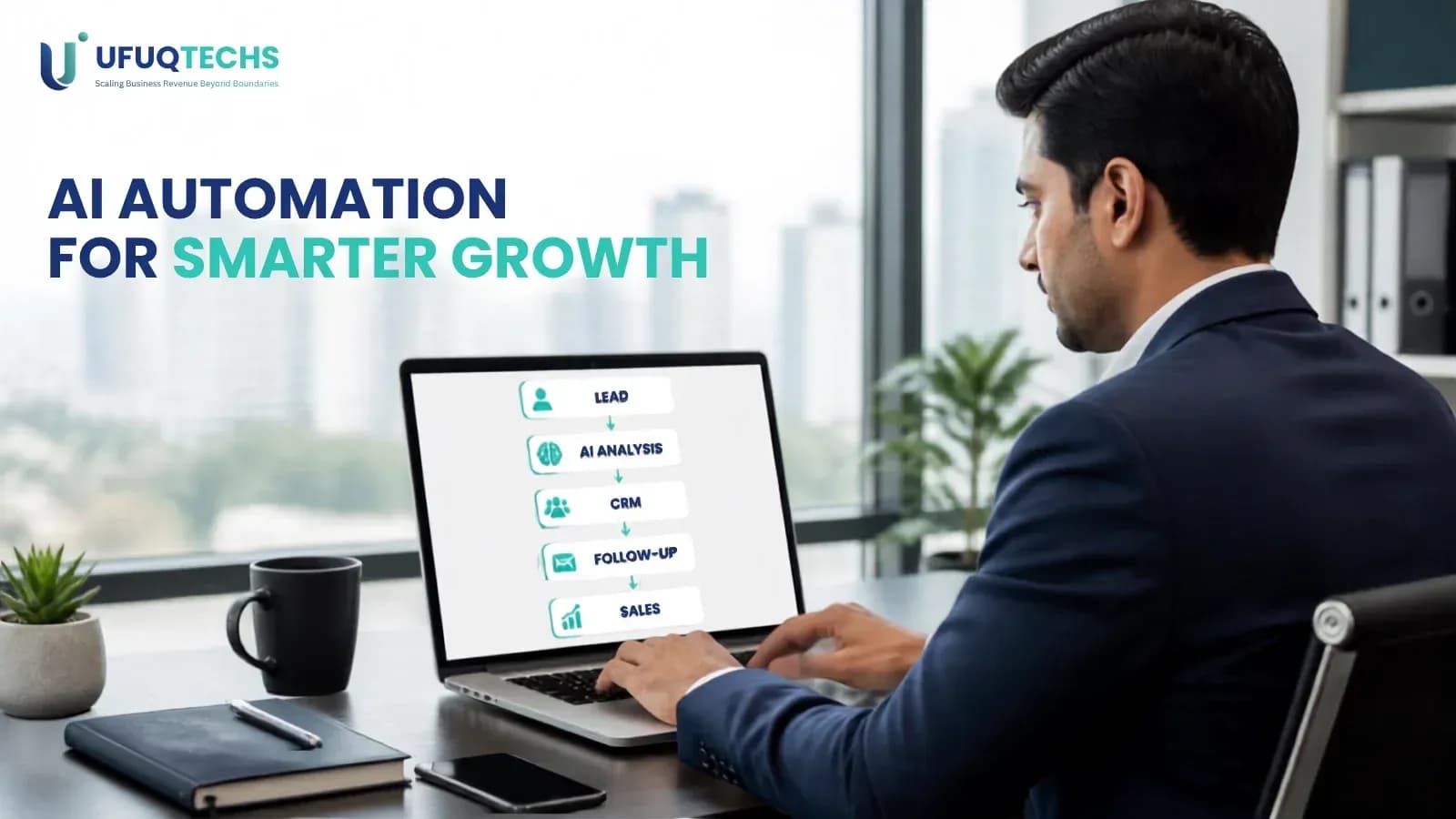
Businesses today are not short of tools. They are short of connected systems.
Teams spend hours moving data between platforms, following up with leads, updating records, preparing reports, and handling repetitive customer requests. These tasks may look small individually, but together they consume a significant amount of productive time.
This is where AI Automation becomes valuable. Instead of simply automating one task, businesses can connect AI with workflows to understand information, make decisions, and trigger the next action automatically.
The result is a business that can operate faster, reduce manual effort, and create a more consistent customer experience.
What Is AI Automation?
AI Automation combines artificial intelligence with automated workflows to handle business tasks that normally require manual intervention.
Traditional automation usually follows fixed rules: if something happens, perform a specific action. AI automation goes further by allowing systems to interpret information, identify patterns, and decide what action should happen next.
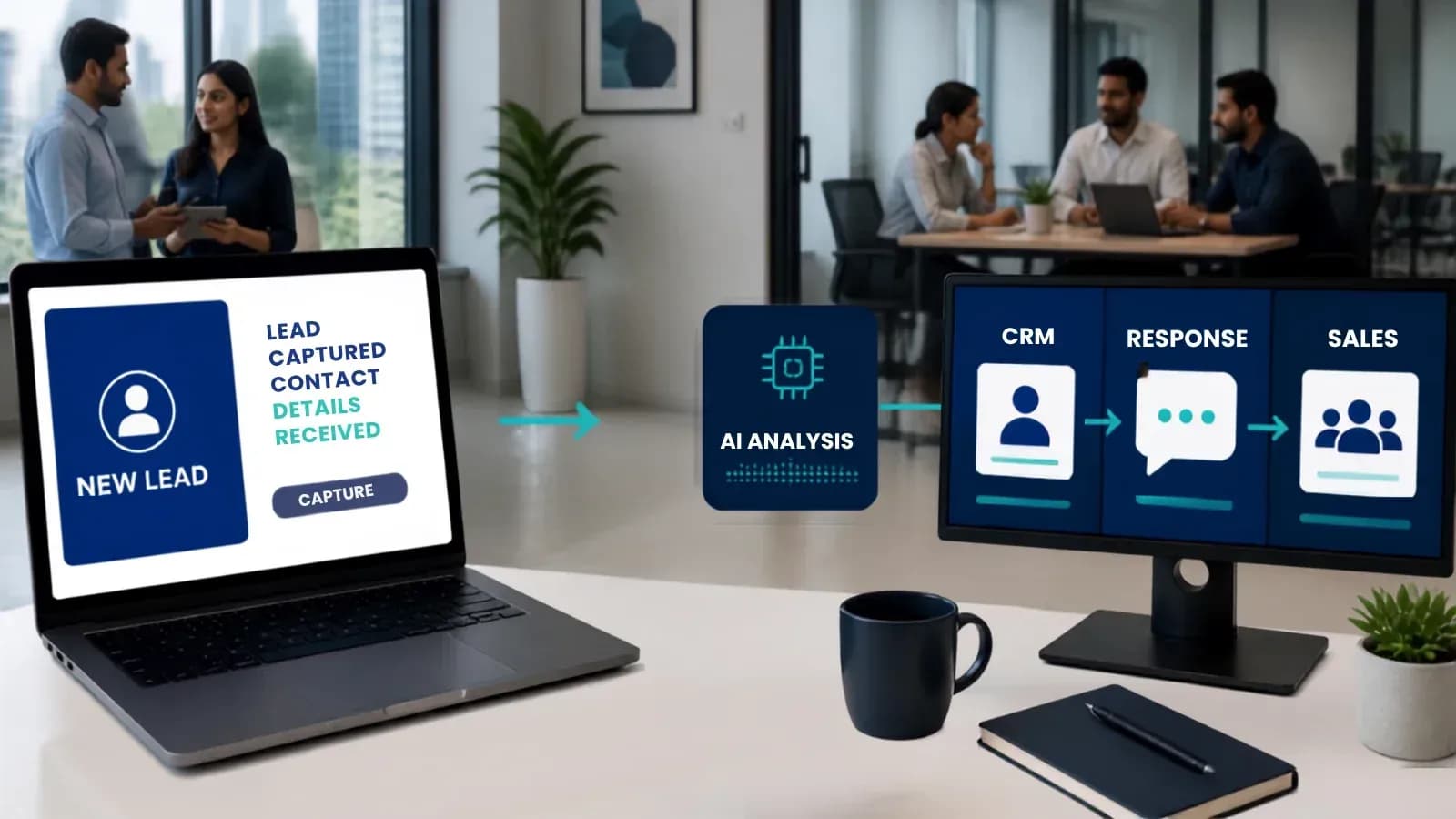
For example, when a new lead submits a form, an AI-powered workflow can:
- Capture the lead automatically
- Analyse the lead's information
- Identify its potential value
- Add it to the CRM
- Send a personalised response
- Notify the sales team
- Schedule a follow-up
This turns a simple lead form into a connected AI workflow.
Why Businesses Are Moving Toward AI Workflow Automation
Manual processes become difficult to manage as a business grows. More customers mean more enquiries, more data, more follow-ups, and more opportunities for human error.
AI workflow automation helps businesses manage this complexity without continuously increasing their workload.
The biggest advantages include:
- Less repetitive work – Employees spend less time on routine administrative tasks.
- Faster response times – Leads and customers can receive immediate responses.
- Better consistency – Workflows follow predefined processes without forgetting steps.
- Improved productivity – Teams can focus on strategy, sales, and customer relationships.
- Scalable operations – Businesses can handle higher workloads without adding the same amount of manual effort.
The goal is not to replace people. The goal is to remove unnecessary work so people can focus on work that actually requires human judgement.
AI Automation vs Traditional Automation
Both approaches can improve efficiency, but they work differently.
Factor | Traditional Automation | AI Automation |
|---|---|---|
Decision-making | Rule-based | Context-based |
Data handling | Structured data | Structured + unstructured data |
Flexibility | Limited | More adaptable |
Personalisation | Basic | More advanced |
Best for | Repetitive fixed tasks | Complex business workflows |
Traditional automation remains useful for predictable processes. AI automation becomes more powerful when a workflow involves understanding language, analysing information, or deciding between different actions.
Where AI Automation Can Improve Business Operations
AI automation can be applied across multiple departments. The most effective opportunities are usually processes that happen frequently and require employees to repeat similar actions.
Sales Automation
Sales teams often lose opportunities because follow-ups are delayed or leads are not properly prioritised.
With sales automation, a business can automatically capture leads, qualify them, assign them to the right salesperson, and trigger follow-up sequences.
AI can also analyse lead information and help sales teams understand which prospects deserve immediate attention.
Customer Support
AI-powered workflows can handle common customer questions, classify requests, and route complex issues to human team members.
This creates a faster first response without forcing support employees to manually handle every basic enquiry.
Marketing Operations
Marketing involves many repetitive processes, including lead collection, segmentation, campaign workflows, reporting, and customer follow-ups.
Connecting these processes through automation can reduce manual coordination and give marketers more time to focus on strategyand creative decisions.
Business Process Automation: What Should You Automate First?
Not every business process needs AI. Choosing the right starting point is more important than implementing as many automations as possible.
A good process for automation usually has three characteristics:
- It happens frequently.
- It follows a repeatable pattern.
- It consumes employee time without creating much strategic value.
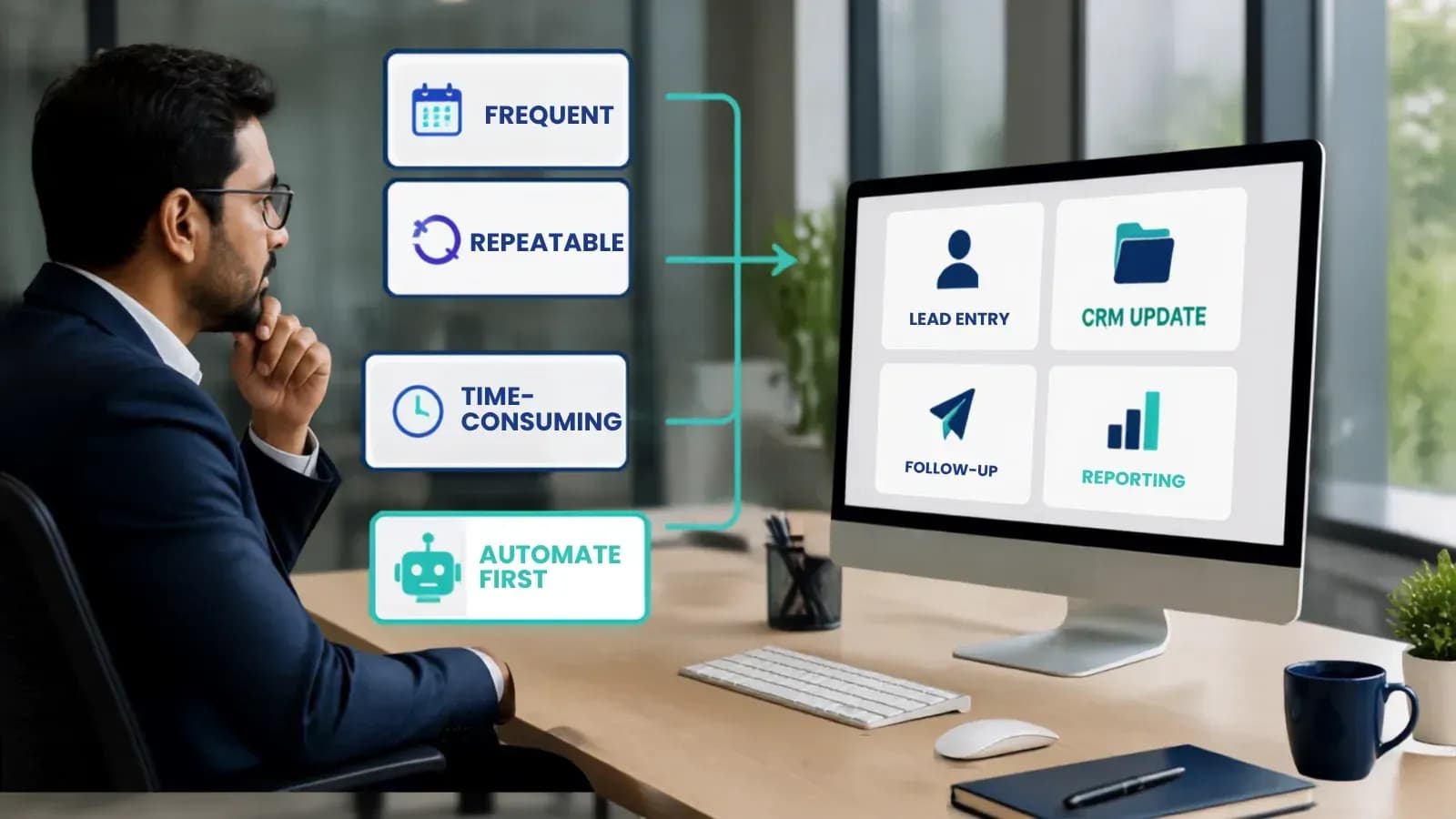
For example, manually copying website leads into a CRM is a strong automation opportunity. Negotiating with an important client is not. Start with one workflow, measure the improvement, and then expand.
How AI Automation Works Inside a Business
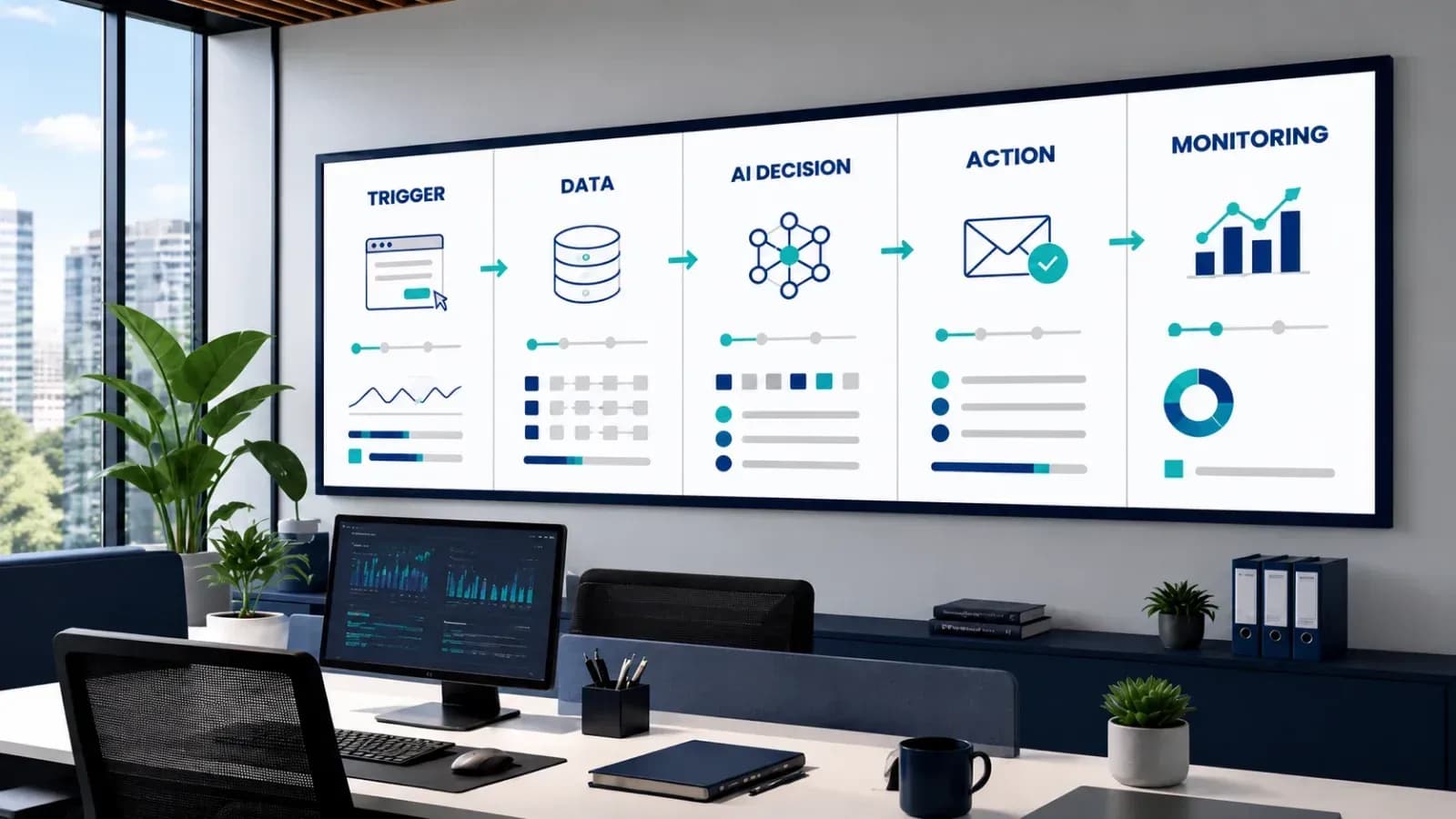
A successful automation system usually connects several stages of a business process.
Stage | What Happens |
|---|---|
Trigger | A form submission, email, purchase, or event starts the workflow |
Data Processing | Information is collected and analysed |
AI Decision | The system evaluates the information |
Action | The workflow sends, updates, assigns, or creates something |
Monitoring | Results are tracked for improvement |
For example, an e-commerce company could connect its website, CRM, email platform, and customer support system.
When a customer makes a purchase, the workflow can update the CRM, trigger an order communication, segment the customer, and start an appropriate post-purchase journey.
The technology is useful because these systems work together instead of operating as disconnected tools.
Common AI Automation Mistakes Businesses Should Avoid
AI automation can create impressive results, but poor implementation can create more problems than it solves.
Automating a Broken Process
If the existing workflow is confusing, automating it will simply make the confusion happen faster.
First understand the process. Remove unnecessary steps. Then automate what remains.
Automating Everything at Once
Businesses sometimes try to automate sales, marketing, support, reporting, and operations simultaneously.
This makes implementation difficult and increases the chances of errors.
A better approach is to identify one high-impact workflow and improve it first.
Removing Human Oversight
AI should not operate without boundaries in every situation. Important decisions may still require human review.
The strongest systems combine AI efficiency with human judgement where it matters.
How to Choose the Right AI Automation Companies
Choosing an AI automation company should not be based only on the number of tools or technologies it offers.
Look for a partner that first understands your business process and then recommends the right technology.
Consider:
- Business process analysis
- Integration capabilities
- CRM and marketing automation experience
- AI workflow design
- Data security
- Reporting and monitoring
- Scalability
- Ongoing support
The right partner should be able to explain why a workflow should be automated, not simply what technology can be added.
What Does AI Automation Cost?
The cost depends on the complexity of the workflow, number of integrations, AI requirements, and level of customisation.
A simple workflow connecting a form with a CRM can be relatively straightforward. A complete business automation system involving CRM, AI qualification, communication, reporting, and multiple integrations requires significantly more planning.
Instead of asking only, "How much does automation cost?" businesses should ask:
How much time, revenue, and operational efficiency can this workflow create?
That shift makes it easier to evaluate automation as a business investment rather than simply a software expense.
The Future of AI-Powered Business Operations
AI automation is moving businesses from isolated software tools toward connected operating systems.
Instead of employees manually moving information from one platform to another, systems can increasingly exchange data, interpret information, and trigger the next action automatically.
This creates a more connected business environment where marketing, sales, customer support, and operations can work from the same flow of information.
For growing businesses, the competitive advantage will not simply come from using AI. It will come from using AI strategically inside the right business workflows.
Build a Smarter Business with AI Automation
AI automation is not about adding another tool to your technology stack. It is about redesigning how work moves through your business.
When the right workflows are connected, teams spend less time managing repetitive tasks and more time creating value. Leads can be handled faster, customer communication can become more consistent, and internal operations can become easier to scale.
At UFUQTECHS, we help businesses build technology-driven growth systems that connect automation, marketing, lead generation, and digital infrastructure.
If you want to identify which processes in your business should be automated first, book a strategy call and turn repetitive work into a scalable business system.