Website Development
Website Development Company in India: Why Your Website Isn’t Converting Qualified Visitors
Getting visitors to your website is only half the job. If those visitors aren't turning into qualified leads, enquiries, or customers, the problem may not be your traffic—it may be your website. Here's why your website isn't converting and what needs to change.
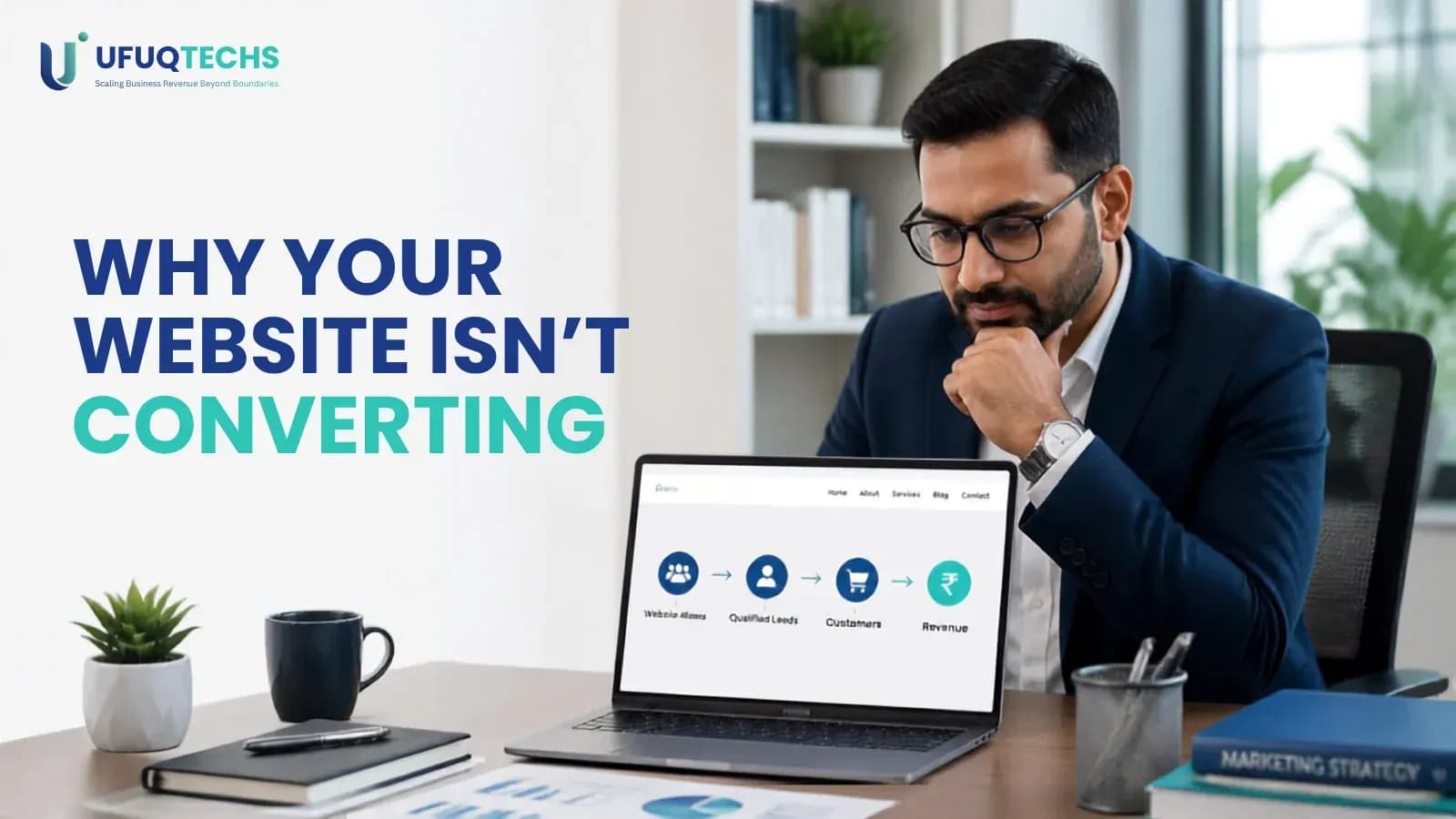
Getting people to your website is only half the job. The harder question is what happens after they arrive. If visitors browse a few pages and leave without calling, submitting a form, requesting a quote, or buying, more traffic may simply make the problem more expensive.
That is why choosing a Website Development Company should involve more than reviewing attractive portfolios. Your website sits between marketing spend and revenue, so its structure, messaging, speed, user experience, conversion paths, and integrations all influence whether attention turns into business.
For Indian startups, SMEs, e-commerce brands, professional service companies, and growing enterprises, the website has become part of the sales infrastructure. It should help the right visitor understand the offer, trust the business, take the next step, and move smoothly into the customer journey. If your website already receives visitors but generates fewer enquiries or sales than expected, the problem may not be traffic. It may be the digital experience those visitors encounter after the click.
Why Website Traffic Doesn't Automatically Turn Into Business
A website can generate thousands of monthly visits and still contribute very little to revenue. Analytics may show increasing sessions, improving rankings, and growing ad clicks, while the sales team continues asking why qualified enquiries remain inconsistent.
This usually happens because traffic and conversion are treated as separate activities. Marketing teams concentrate on bringing visitors in, while website development concentrates on making pages technically functional. The critical space between those two responsibilities is often ignored.
Consider a hypothetical business receiving 10,000 website visitors every month. Increasing that traffic to 15,000 sounds like progress, but if visitors cannot understand the offer or find a convincing next step, the business has simply increased the number of people experiencing the same problem.
Good Website Development Services therefore begin with a commercial question rather than a design question: what should the right visitor understand, believe, and do after reaching this page.
1. Visitors Cannot Quickly Understand What You Actually Offer
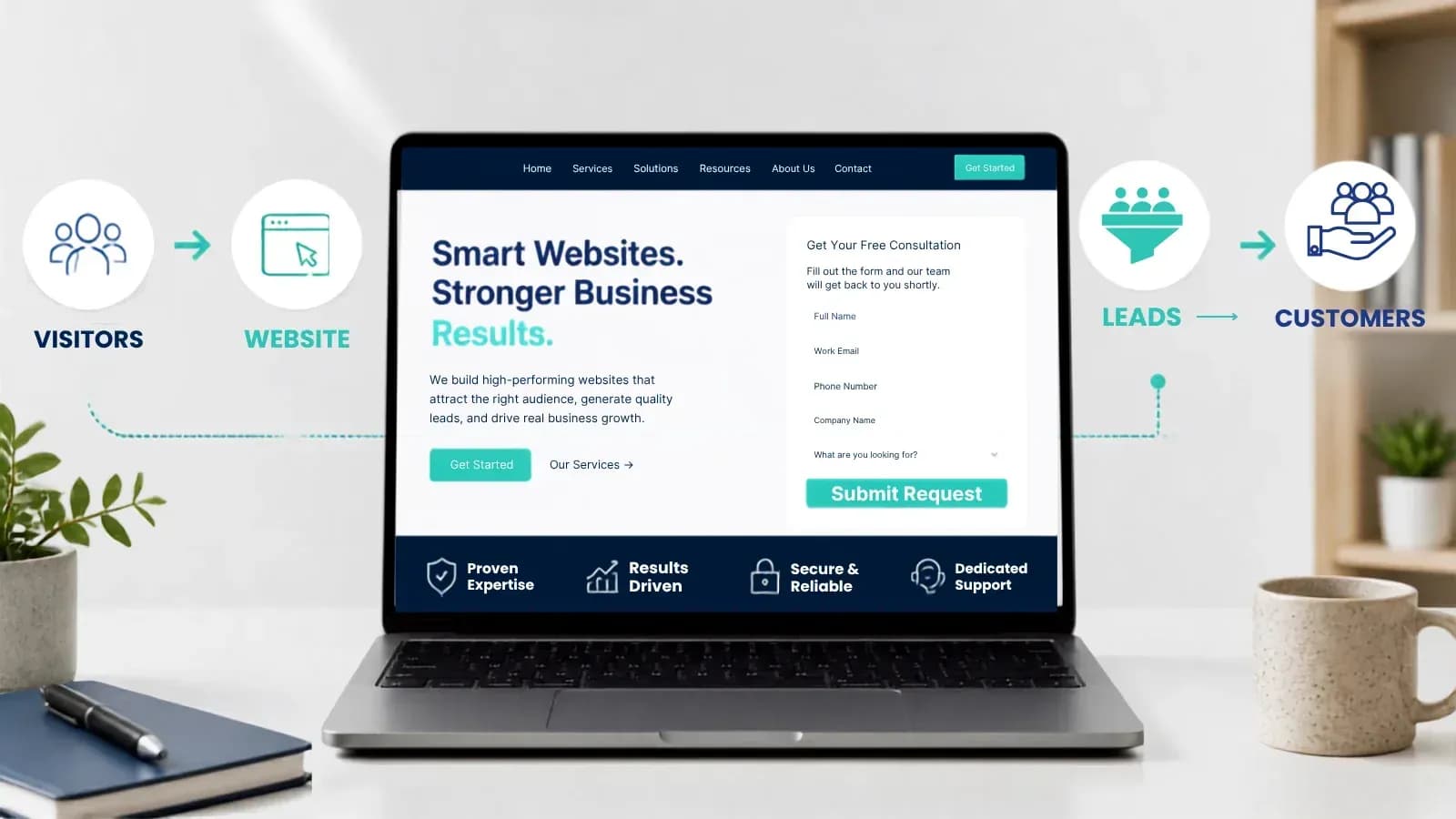
Open your homepage and look at the first screen without scrolling. Could someone unfamiliar with your company understand what you sell, who you help, and why the solution matters within a few moments?
Many websites make that unnecessarily difficult. Hero sections are filled with phrases such as "innovative digital solutions," "transforming possibilities," or "next-generation experiences." They sound sophisticated, but they rarely give a potential customer enough information to make a decision.
A clearer message connects the service with an outcome. Instead of simply saying "We create innovative digital experiences," a development business might explain that it builds high-performing websites designed to turn relevant traffic into qualified enquiries and customers.
This is particularly important in Corporate Website Development, where several services, audiences, and business divisions may need to coexist. Strong information architecture simplifies that complexity rather than transferring it to the visitor.
2. Your Website Is Organized Around Your Company, Not Your Customer
Businesses naturally organize websites around internal structures. There is an About page, Services page, Industries page, Solutions page, Resources section, and Contact page because those categories make sense from inside the organization.
Customers arrive with different questions. They want to know whether you understand their problem, whether your solution fits their situation, what it will involve, whether they can trust you, and what they should do next.
A conversion-focused Website Development Agency should therefore map the customer journey before deciding how pages connect. Navigation and content hierarchy should reflect the information customers need while moving toward a decision.
For many B2B websites, that journey resembles problem recognition, solution understanding, capability evaluation, proof, risk reduction, and contact. If a visitor must search through several disconnected pages to complete that journey, unnecessary friction enters the buying process.
3. Your Calls to Action Don't Give Visitors a Clear Next Step
Learn More" is not always a bad call to action. The problem is that it often tells the visitor nothing about what happens after clicking, especially when the page contains several equally vague options.
Compare it with actions such as Get a Free Website Audit, Request a Project Estimate, or Book a Strategy Call. Each describes the next step and gives the visitor a better idea of what they will receive.
The opposite problem is equally common. Some websites present five or six competing actions on the same screen. Visitors are asked to book, subscribe, download, explore, watch, contact, and request something before they have decided whether they trust the company.
Effective Custom Website Development Services should establish a primary conversion objective for each important page. Secondary actions can still exist, but they should support rather than compete with the main customer journey.
4. Your Mobile Website Creates More Friction Than the Desktop Version
A website can look excellent on a large monitor and become frustrating on a smartphone. Oversized banners, tiny buttons, complicated menus, intrusive pop-ups, long forms, and poorly positioned CTAs can quickly weaken the mobile experience.
The visitor does not care how impressive the desktop design looked during the presentation. They judge the business through the version of the website currently in their hand.
Responsive development therefore needs more than shrinking desktop layouts to fit smaller screens. A capable web development agency should examine how navigation, forms, content hierarchy, buttons, images, and conversion actions behave across practical mobile journeys.
For an e-commerce business, this means testing product discovery through checkout. For a service company, it means checking whether visitors can understand the offer, evaluate proof, contact the company, and complete important forms without unnecessary effort.
5. Your Website Is Too Slow When Visitors Need It to Feel Effortless
Website speed is often discussed as a technical metric, but visitors experience it as friction. They do not think about JavaScript execution, image compression, caching, or server response time. They simply notice that the page feels slow.
Large media files, excessive animations, third-party scripts, poorly configured plugins, unnecessary tracking tools, and inefficient development can all contribute to that experience. Each delay occurs before the offer has had a proper opportunity to persuade the visitor.
Strong Web Development Services should consider performance during architecture and development rather than waiting until launch. Image optimization, caching, script management, responsive assets, hosting configuration, and performance monitoring should form part of the technical foundation.
Speed alone will not rescue a weak offer or confusing website. But making visitors wait rarely improves the probability that they will stay long enough to understand either one.
6. Your Landing Page Doesn't Match the Reason Someone Clicked
Imagine an Indian e-commerce company running a paid search campaign specifically for custom e-commerce development. The advertisement promises a solution for building a scalable online store, so the visitor clicks expecting information directly related to that requirement.
Instead, the click opens a generic homepage discussing websites, SEO, advertising, automation, lead generation, content marketing, and several other services. Everything may be technically relevant to the company, but very little is immediately relevant to the visitor's original intention.
This creates a message gap between acquisition and conversion. A stronger journey maintains continuity across search intent → advertisement → landing page → offer → call to action, reducing the amount of interpretation required from the visitor.
A good web development company should therefore understand where important traffic originates. Website architecture becomes considerably more effective when development decisions are connected with SEO, paid advertising, content, and the wider acquisition strategy.
7. Your Website Makes Claims Without Giving Visitors Enough Reasons to Believe Them
Almost every company claims to provide excellent service, innovative solutions, experienced professionals, and customer-focused support. Because these statements are easy to make, they rarely create meaningful differentiation by themselves.
Trust becomes stronger when visitors can inspect evidence. Depending on the business, that might include genuine client logos, detailed case studies, measurable outcomes, testimonials, team information, company details, certifications, warranties, policies, project examples, or a transparent explanation of the delivery process.
The quality of the proof matters as much as its presence. A case study explaining the original problem, what changed, and what happened afterward communicates more than a decorative slider containing five-star icons and generic praise.
For high-value Corporate Website Development, trust should be treated as part of the information architecture. Proof belongs near the decisions it supports rather than being hidden on a page that interested prospects may never visit.
8. Your Forms Ask for Too Much Before You've Earned Enough Trust
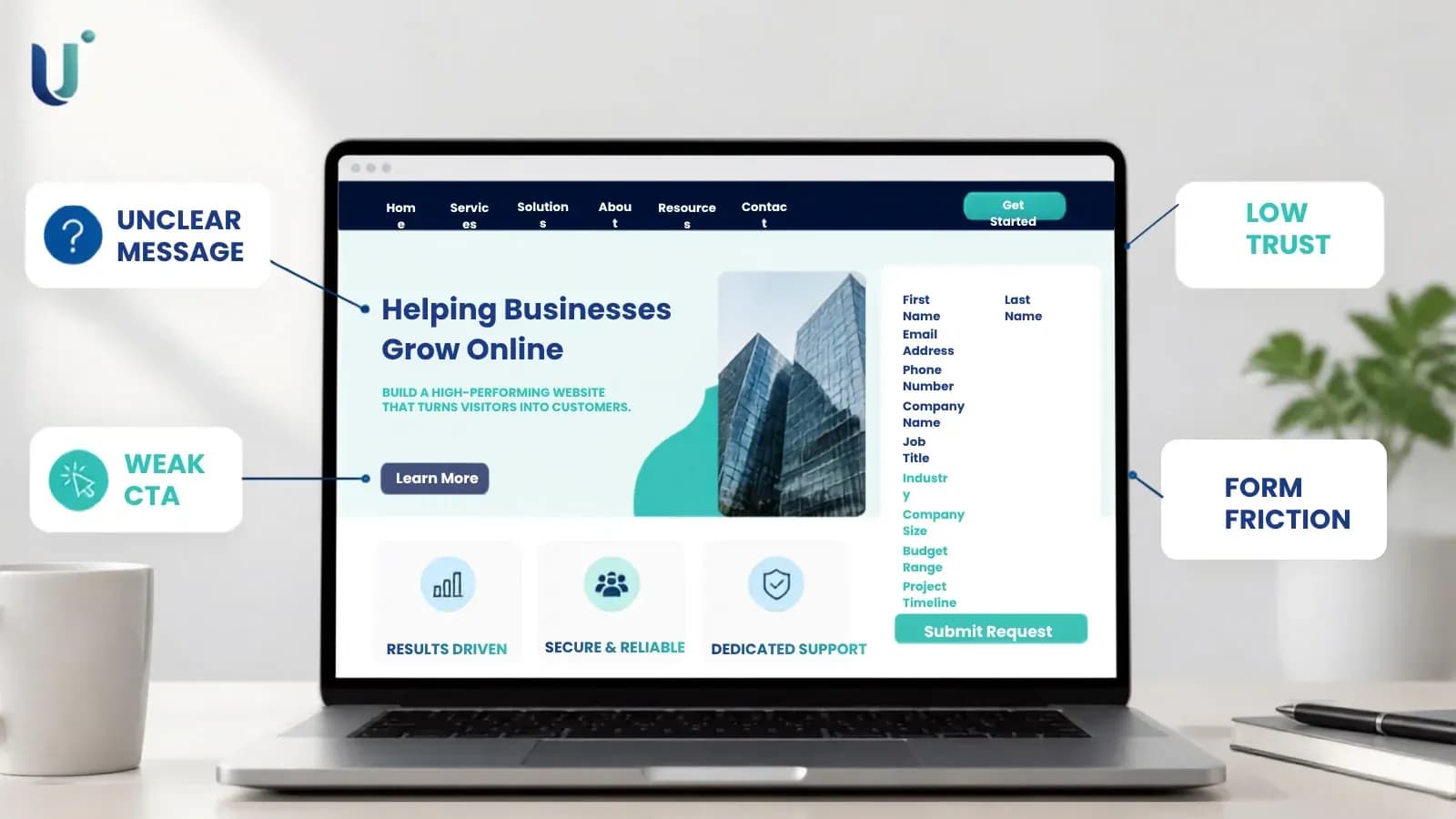
Marketing and sales teams naturally want detailed information about every prospect. Budget, timeline, company size, industry, phone number, job title, current website, project requirements, and marketing spend can all be useful during qualification.
The problem is timing. Someone requesting an enterprise proposal may expect to provide detailed information, while someone asking for an initial website audit may hesitate when confronted with a twelve-field form.
Good website development considers the value exchange. The more effort you ask from a visitor, the clearer the reason for providing that information should become.
A practical approach is to collect enough information to enable the next conversation, then gather additional details when the relationship progresses. Reducing unnecessary friction does not mean removing qualification; it means applying qualification at the appropriate stage.
9. Your Website Stops Working the Moment a Visitor Becomes a Lead
A visitor completes your contact form and sees a confirmation message. From their perspective, the process has started. Inside the business, however, the enquiry may have entered an inbox that someone checks manually.
The message gets forwarded to sales. Details are copied into a spreadsheet or CRM. Someone plans to follow up later. A day passes, and a prospect who was ready to talk has already contacted another provider.
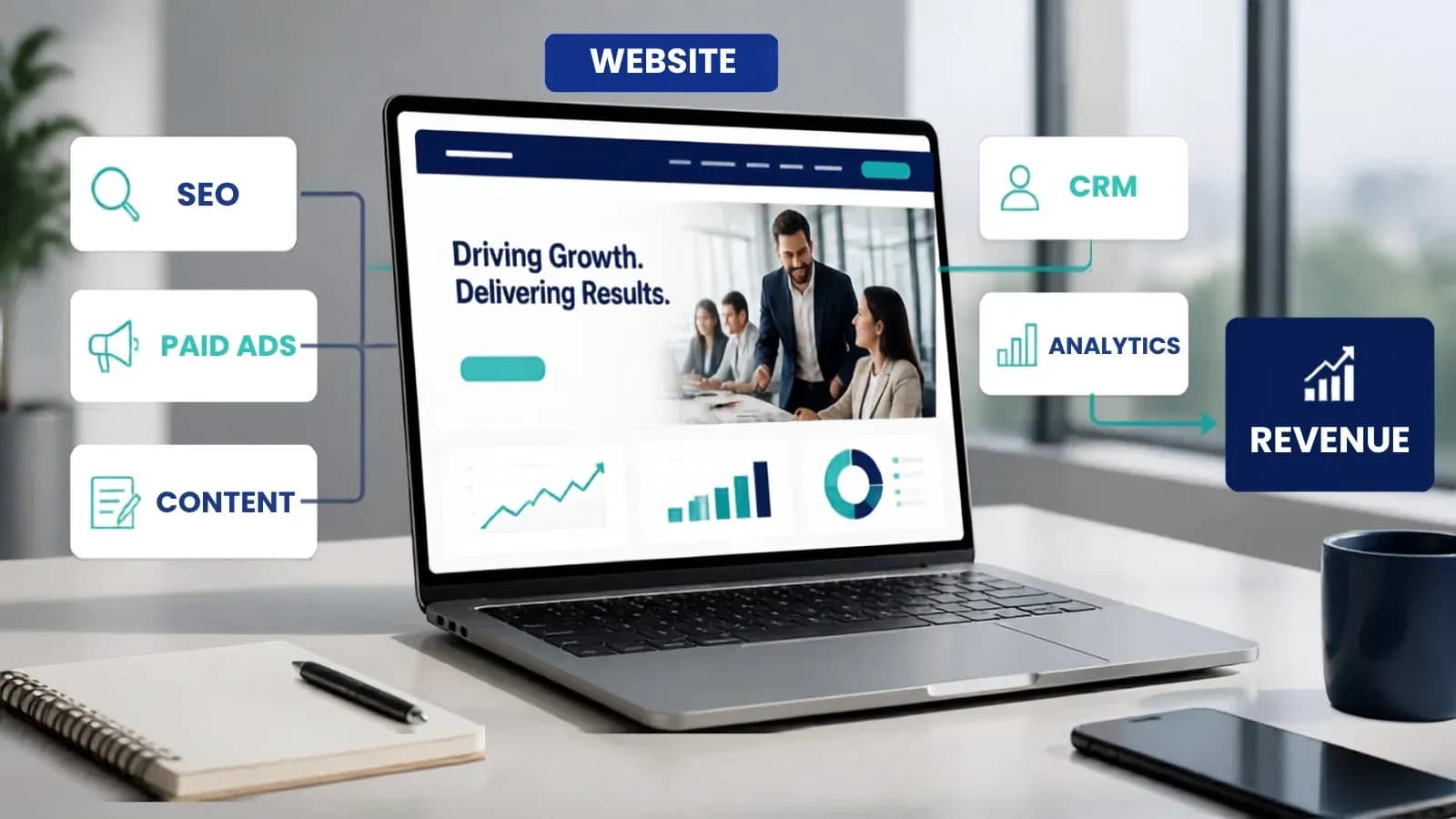
This is why modern website development increasingly involves systems beyond the visible website. CRM platforms, email automation, analytics, WhatsApp workflows, booking systems, payment gateways, customer support platforms, and internal databases may all need to exchange information.
A website is one layer of the customer journey. When the infrastructure behind it remains disconnected, redesigning the interface solves only the part of the problem customers can see.
10. You're Treating Website Launch Day as the End of the Project
A website is launched, everyone approves the final design, and attention immediately moves somewhere else. Six months later, forms have changed, plugins need updates, campaign pages have accumulated, content has expanded, and nobody is certain whether conversion tracking still works correctly.
This is where Website Maintenance Services become more than technical support. A growing website needs monitoring, updates, testing, security management, performance improvements, and periodic evaluation of how visitors actually use important pages.
Maintenance can include broken-link checks, form testing, speed improvements, analytics validation, content updates, technical fixes, security updates, uptime monitoring, and conversion improvements based on observed behaviour.
A business website should be treated more like operating infrastructure than a finished brochure. Launch establishes the foundation; performance over the following months determines how useful that foundation becomes.
Ecommerce Website Development Has Even Less Room for Friction
An e-commerce customer usually moves through several stages before revenue is created: category discovery, product evaluation, variant selection, cart, shipping information, payment, and confirmation. Each additional stage creates another opportunity for hesitation.
Poor product photography, confusing filters, unclear sizing, slow pages, unexpected shipping charges, forced account creation, weak payment options, and complicated checkout flows can interrupt a purchase even when the customer initially wanted the product.
Effective Ecommerce Website Development therefore requires more than creating product pages and integrating a payment gateway. Search, navigation, product information, cart behaviour, mobile usability, checkout, trust, and post-purchase communication all contribute to the commercial experience.
The objective is not to remove every step. It is to remove unnecessary uncertainty and effort between genuine product interest and a completed purchase.
How to Evaluate a Website Development Company Before Hiring One
An attractive portfolio tells you whether a company can produce attractive work. It does not automatically tell you whether that work was fast, measurable, easy to maintain, technically scalable, integrated with business systems, or effective at generating enquiries.
Before selecting a Website Development Company, ask how the team approaches business objectives, customer journeys, mobile UX, conversion tracking, SEO architecture, performance, integrations, security, analytics, and post-launch maintenance.
The technology discussion should come after the business discussion. WordPress, Shopify, React, custom development, or another technology stack can all be appropriate depending on the requirements.
The stronger question is not simply, "What technology will you use?" Ask, "Why is this architecture appropriate for what our business needs the website to accomplish?"
Area to Evaluate | Question to Ask Your Development Partner |
|---|---|
Business Objective | What commercial outcome should the website support? |
Customer Journey | How will different visitors find the information they need? |
Conversion | What are the primary actions on important pages? |
Mobile UX | How will key journeys work across smaller screens? |
SEO | How will site architecture support organic visibility? |
Performance | How will website speed be tested and monitored? |
Integrations | How will CRM, analytics, payments, or automation connect? |
Measurement | Which actions and conversion events will be tracked? |
Scalability | Can the architecture support future business requirements? |
Maintenance | What happens after the website launches? |
A simple service business and a large e-commerce operation should not receive identical solutions. Neither should an early-stage startup and an enterprise with multiple customer groups, integrations, and operational requirements.
Why UfuqTechs Treats Website Development as Business Infrastructure
UfuqTechs approaches website development as part of a broader digital business system rather than an isolated design project. The company serves Indian startups, SMEs, mid-sized businesses, and enterprises through website development, AI automation, digital marketing, SEO, lead generation, and related digital solutions.
The reasoning is practical. A website may generate the enquiry, but CRM processes determine where that enquiry goes. Advertising may generate the visit, but landing-page experience affects what happens next. Analytics then determines whether management can understand the result.
UfuqTechs' stated process begins by understanding business goals, existing technology, customer journeys, and growth opportunities. The next stage focuses on building the digital foundation before connecting relevant marketing platforms, CRM systems, automation workflows, and measurement infrastructure.
This approach treats the website as part of how the business attracts, converts, serves, and follows up with customers. Development decisions therefore have a commercial context rather than being based entirely on visual preference.
Before Buying More Traffic, Find Out Where Your Website Is Losing Customers
If your website already attracts relevant visitors but struggles to turn them into enquiries or customers, increasing advertising spend may not be the first problem to solve. More traffic entering a weak conversion journey can simply increase acquisition costs.
The underlying issue might be positioning, mobile usability, page speed, trust, landing-page relevance, forms, checkout friction, analytics, or the systems that take over after a visitor submits an enquiry.
The right Website Development Company should help distinguish between these problems before recommending another redesign, another campaign, or another piece of technology.
UfuqTechs offers a Free Website Audit for businesses that want to evaluate how their website, customer journey, marketing infrastructure, and digital systems contribute to measurable growth. The goal is not simply to build a newer website—it is to build one with a clearer business purpose.