SEO
Ecommerce SEO Services in Mumbai: A Practical Guide to Growing Online Stores
Mumbai's ecommerce market is highly competitive. If your products aren't visible when customers are searching, you're missing valuable opportunities. Ecommerce SEO can help improve product visibility, attract relevant customers, and drive long-term business growth.
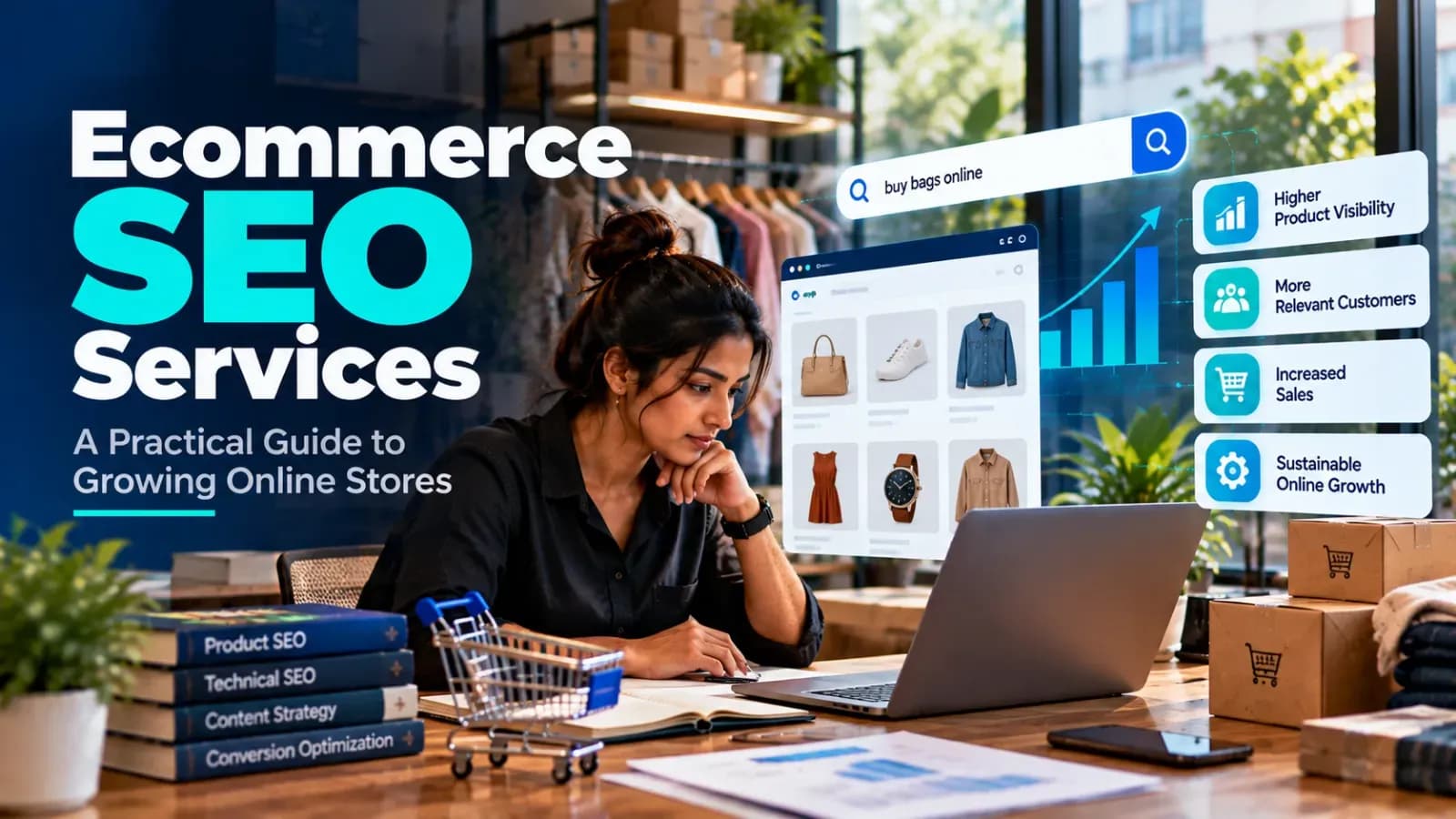
Mumbai is a competitive market for ecommerce businesses. Customers have more choices, more brands to compare, and more information available before they make a purchase. Because of that, simply having an online store is no longer enough. Your products need to be visible when potential customers are actively searching for them.
This is where Ecommerce SEO Services in Mumbai become important. Ecommerce SEO helps businesses improve the visibility of their products, categories, and other important pages in search results. But the real objective is bigger than rankings. The goal is to bring relevant visitors to the website and give them a clear path from discovery to purchase.
A store can have excellent products and competitive pricing, yet still struggle if customers cannot find it. SEO helps solve that visibility problem by connecting what people search for with the pages and products your business offers.
What Are Ecommerce SEO Services?
Ecommerce SEO is the process of improving an online store so that search engines can better understand, crawl, and rank its important pages. It covers much more than adding keywords to product descriptions.
A complete ecommerce SEO approach can include keyword research, product page optimization, category page optimization, technical SEO, internal linking, content strategy, image optimization, structured data, and conversion-focused improvements.
The important thing is how these activities work together. Optimizing one product page will not automatically fix a website with poor structure, duplicate URLs, weak category pages, or technical issues. SEO works better when the website is treated as one connected system.
For example, a customer may first discover a blog through Google, move to a category page, compare products, and eventually purchase. Every stage needs to support the next one. That is why businesses looking for SEO Services in Mumbai should look beyond basic keyword placement and ask how the complete customer journey will be improved.
Why Does Ecommerce SEO Matter for Mumbai Businesses?

Mumbai has a large and highly competitive digital market. An ecommerce customer can compare several brands within a few minutes. If your website does not appear for relevant searches, another business gets the opportunity to earn that customer's attention.
Search behaviour also tells you something important about intent. Someone searching for a general product category may still be researching. Someone searching for a specific product or using terms such as “buy” or “online” may already be much closer to making a decision.
That difference is valuable for ecommerce businesses. Instead of trying to attract everyone, SEO allows you to focus on searches that have a genuine connection with your products.
It also gives your website an opportunity to build organic visibility instead of depending entirely on paid campaigns. Advertising can bring immediate traffic, but SEO focuses on strengthening the website and its content so that important pages can continue competing for relevant searches over time.
What Should Ecommerce SEO Services in Mumbai Include?

Not every ecommerce website needs the same strategy. A fashion store with a few hundred products has different challenges from an electronics store with thousands of products and multiple variations.
The first step should therefore be understanding the website, products, customers, competition, and search demand. From there, the SEO work can be prioritized around the pages and opportunities most likely to support business growth.
1. Ecommerce Keyword Research
Keyword research should start with the way customers actually search. A keyword with high search volume is not automatically the best keyword for your business.
For example, “running shoes” is broad. A search such as “buy running shoes online” gives stronger information about the user's commercial intent. A specific product-related search can be even more valuable when it matches exactly what your store sells.
Good ecommerce keyword research considers search volume, competition, intent, relevance, and the type of page that should rank for the query.
The purpose is not to collect hundreds of keywords and force them across the website. It is to identify realistic opportunities and assign the right keyword to the right page.
2. Product Page Optimization
Product pages are often the closest connection between organic search and a purchase. They need to provide enough information for both search engines and customers.
A strong product page should clearly explain what the product is, who it is for, what makes it useful, and why the customer should consider buying it.
SEO optimization can involve the product title, description, headings, URL, images, alt text, structured data, and supporting content. But the content should always remain natural.
Repeating the same keyword again and again does not make a product page better. It usually makes it harder to read.
The better approach is to answer the customer's questions clearly while naturally using the language they are likely to search.
3. Category Page Optimization
Category pages deserve more attention than they usually receive.
They are not simply pages where products are displayed. A well-structured category page can target broader commercial searches and help customers discover the right products.
For example, a store selling footwear might have separate category pages for running shoes, casual shoes, formal shoes, and sports shoes. Each category can target a different search opportunity while individual product pages focus on specific products.
This creates a logical relationship between the website's pages and makes navigation easier for customers.
4. Technical SEO for Ecommerce Websites
Technical SEO becomes increasingly important as the number of products grows.
Large ecommerce websites can have thousands of URLs created through product variations, filters, sorting options, search pages, pagination, and discontinued products. Without proper control, this can create unnecessary technical complexity.
A technical SEO review should look at crawlability, indexation, canonical URLs, redirects, broken links, mobile experience, page speed, sitemap structure, duplicate content, and structured data.
The objective is straightforward: make it easier for search engines to discover and understand the pages that actually matter.
5. Internal Linking
Internal linking helps connect related pages and creates a clearer path through the website.
A blog can support a category. A category can support products. A product can then become the final destination for a customer who is ready to buy.
For example, a guide about choosing the right running shoes can naturally direct readers toward a relevant product category. This is much more useful than adding random links simply to increase the number of internal links.
For ecommerce brands that need a stronger content layer around their products, content marketing services can also support educational topics, buying guides, comparisons, and other search-focused content.
Ecommerce SEO vs Paid Advertising
SEO and paid advertising can both contribute to ecommerce growth, but they work differently. Paid advertising can create visibility quickly because businesses pay to appear in selected placements. SEO usually takes more time because the website needs to build relevance, technical strength, useful content, and authority.
Factor | Ecommerce SEO | Paid Advertising |
Visibility | Organic search visibility | Paid visibility |
Speed | Gradual | Usually faster |
Long-term value | Builds organic assets | Depends on active campaigns |
Search behaviour | Captures relevant organic searches | Depends on targeting |
Cost model | SEO investment | Ongoing advertising spend |
For many ecommerce businesses, the better question is not whether to choose SEO or advertising. It is how both channels can work together. Paid campaigns can help generate immediate demand while SEO builds a stronger organic foundation.
How Much Do Ecommerce SEO Services in Mumbai Cost?
There is no fixed price for ecommerce SEO because every website has different requirements. The investment can depend on the number of products, website architecture, competition, technical issues, content requirements, existing organic visibility, and business goals.
A small online store may need focused optimization for its most important categories and products. A large ecommerce website may require continuous technical monitoring, content development, product optimization, and extensive internal linking.
This is why businesses should not compare SEO providers only by their monthly fee. The more important question is what work is actually included.
SEO Area | What You Should Look For |
Keyword Research | Commercial and product-focused opportunities |
Product SEO | Titles, descriptions, images and structured data |
Category SEO | Clear category architecture |
Technical SEO | Crawl and indexation improvements |
Content | Useful search-focused content |
Internal Linking | Logical connections between pages |
Reporting | Traffic, visibility and conversion insights |
A cheaper package is not necessarily more affordable if it does not address the problems that are limiting your organic growth.
How to Choose Professional SEO Services in Mumbai
Before hiring an SEO provider, ask how they plan to work on your website.
A good provider should be able to explain the strategy without making everything sound complicated. You should understand which pages will be prioritized, how keywords will be selected, what technical issues will be addressed, and how success will be measured.
Things to Check Before Hiring an SEO Provider
- Does the provider understand ecommerce website structure?
- Are keywords selected according to search intent?
- Will product and category pages be optimized?
- Do they check technical SEO problems?
- Is content created around actual customer searches?
- Are internal links planned logically?
- Will organic conversions be tracked?
- Do monthly reports explain business progress?
Be careful with providers promising instant rankings or guaranteed Google positions. SEO is affected by competition, website quality, content, authority, technical factors, and changes in search behaviour.
The right provider should focus on building a stronger system rather than selling unrealistic promises.
7 Practical Ways to Improve Ecommerce SEO

You do not need to change everything on your website at the same time. Start with the areas that can make the biggest difference.
- Create a clear website structure so users and search engines can understand the relationship between categories and products.
- Target commercial keywords on pages where visitors can actually take action.
- Improve product descriptions by answering real customer questions instead of repeating keywords.
- Optimize product images with descriptive filenames, useful alt text, and suitable compression.
- Strengthen internal linking between relevant blogs, categories, subcategories, and products.
- Fix technical SEO issues that can affect crawling, indexing, or user experience.
- Track business outcomes such as organic conversions and revenue instead of focusing only on rankings.
If organic visitors are reaching the website but not taking meaningful actions, the next opportunity may be improving your wider lead generation systems and conversion journey.
What Should You Track From Ecommerce SEO?
SEO reporting should answer one important question: Is organic search creating better opportunities for the business?
Keyword rankings are useful, but they do not tell the complete story. You should also look at organic traffic, product impressions, category visibility, click-through rate, conversions, add-to-cart activity, and organic revenue where tracking is available.
This changes the conversation from “How many keywords are ranking?” to “Are the right people finding the right pages and taking useful actions?”
That is a much stronger way to evaluate an SEO campaign.
Build an Ecommerce SEO System, Not Just Rankings
Ecommerce SEO becomes more valuable when every part of the website works together.
Search Demand → Relevant Page → Product Discovery → Trust → Conversion → Growth
That is the bigger picture.
Your ranking matters, but what happens after the click matters even more. A visitor should be able to understand the product, find supporting information, compare options, and move towards a purchase without unnecessary friction.
This is why SEO should not be treated as a monthly checklist
It should become part of the infrastructure behind your digital growth.
UFUQTECHS approaches SEO by connecting search intent, technical foundations, website structure, content, internal linking, and conversion opportunities into one growth-focused system.
Ready to Build a Stronger Ecommerce Growth Strategy?
Your ecommerce website should do more than appear in Google.
It should help the right customers discover your products, understand your value, and take the next step with confidence.
If your store is struggling with organic visibility, the answer may not simply be “publish more content.” The real opportunity could be in your website structure, product pages, technical foundation, search strategy, or conversion journey.
Explore UFUQTECHS SEO Services and build a stronger organic foundation for your ecommerce business.
FAQs About Ecommerce SEO Services in Mumbai
What are Ecommerce SEO Services in Mumbai?
Ecommerce SEO services help online stores improve their visibility for relevant product, category, and commercial searches. The work can include keyword research, technical SEO, product optimization, content, internal linking, and performance tracking.
Is ecommerce SEO worth it for an online store?
It can be valuable when customers use search engines to discover products. A strong SEO strategy can help an ecommerce business attract relevant visitors and build organic visibility over time.
How long does ecommerce SEO take to show results?
There is no fixed timeline. Results depend on competition, website condition, authority, content quality, search demand, and how much SEO work is implemented.
Should I optimize product pages or category pages first?
It depends on the website and search opportunities. Category pages can target broader commercial searches, while product pages can focus on more specific product-related terms. Both can play an important role.
Can ecommerce SEO replace Google Ads?
Not necessarily. Paid advertising can provide faster visibility, while SEO focuses on building organic visibility over time. Many businesses can benefit from using both strategically.
How important is technical SEO for ecommerce?
Technical SEO is particularly important for larger ecommerce websites because products, variations, filters, redirects, and duplicate URLs can create complex crawling and indexing issues.
How do I choose the best SEO services in Mumbai?
Look for a provider that understands ecommerce architecture, search intent, technical SEO, content, internal linking, and conversion tracking. The strategy should be connected to business objectives rather than rankings alone.