SEO
Local SEO for Small Business: Strategies & Checklist
Help your small business rank higher on Google and Maps with practical local SEO strategies, expert tips, and a simple checklist to attract nearby customers.
Local SEO for Small Business: Strategies & Checklist
Your business may offer excellent services, but what happens when nearby customers search on Google and find your competitors instead?
For small businesses in India, being visible in local search results can make a real difference. Whether you run a dental clinic in Lucknow, a salon in Delhi, or a repair service in Pune, potential customers often look online before contacting a business.
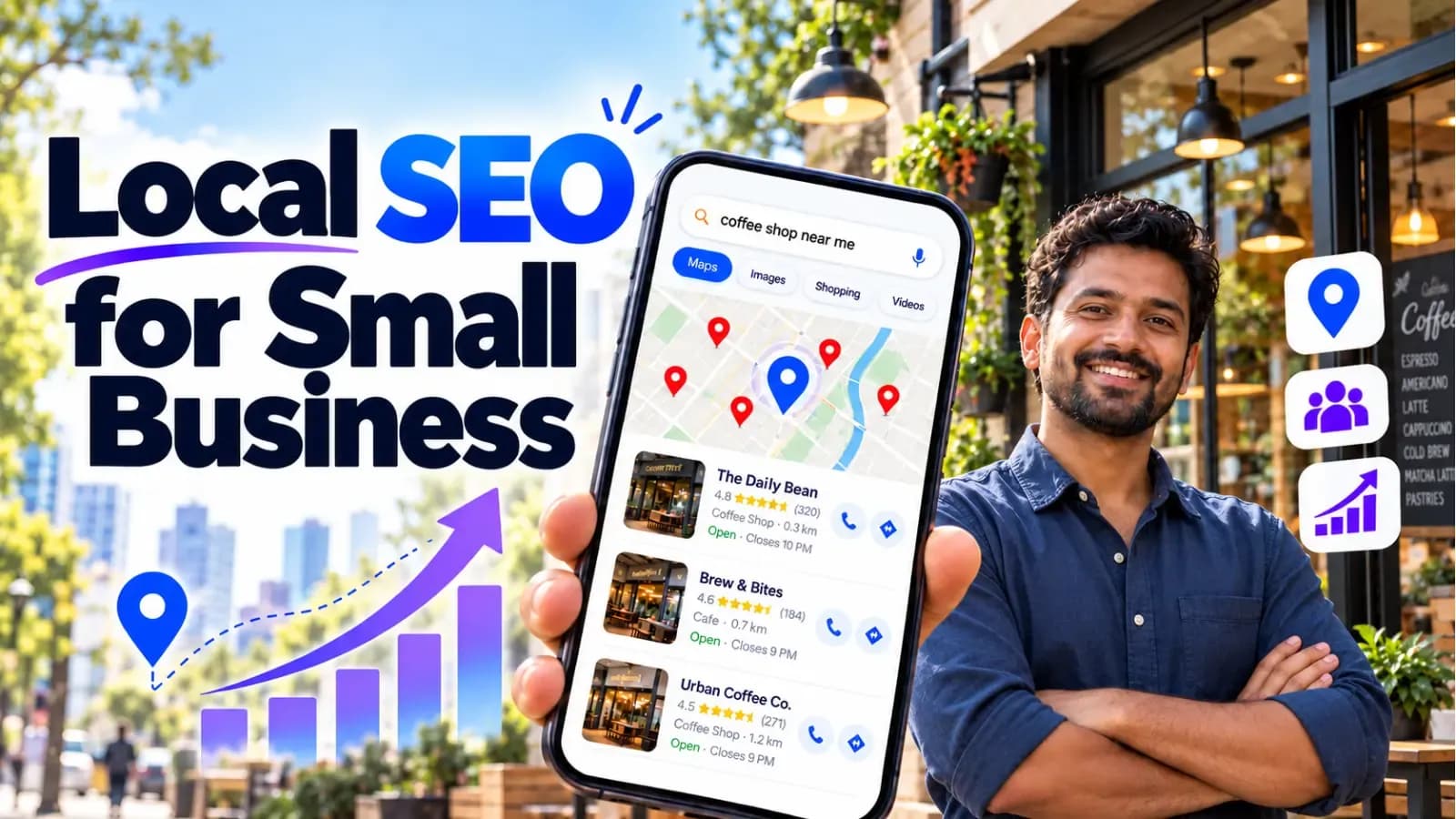
Local SEO for small business helps you appear in relevant Google searches and Maps results, making it easier for nearby customers to discover your services.
This guide explains how local SEO works, why it matters, and the practical steps you can take to improve your visibility and generate relevant enquiries.
What Is Local SEO for Small Business?
Local Search Engine Optimization (SEO) is the process of improving a business's online presence so customers can discover it through location-based searches.
For example, someone searching for "dentist in Lucknow" or "AC repair near me" is usually looking for a service in a particular area.
Google may display nearby businesses through Maps listings, followed by regular organic search results.
Unlike broader SEO campaigns, local SEO focuses on connecting businesses with customers in the areas they serve.
Small business local SEO generally involves optimizing your Google Business Profile, website, local keywords, customer reviews, and business listings.
The goal is not simply to attract more website visitors. It is to help relevant customers find and contact your business.
Why Is Local SEO Important for Small Businesses?
Many small businesses compete with larger companies that have bigger marketing budgets. Local SEO creates opportunities to reach customers based on geographical relevance rather than advertising expenditure alone.
Some important local SEO benefits for small business include:
- Better local visibility: Potential customers can discover your business when searching for nearby services.
- Relevant enquiries: Location-based searches often come from people actively considering a product or service.
- Greater trust: Accurate business information, authentic reviews, and a professional website help customers evaluate your business.
- More customer interactions: Local visibility can encourage phone calls, website visits, appointment requests, and direction searches.
- Long-term discoverability: Consistent optimization can support organic visibility beyond individual advertising campaigns.
Consider a hypothetical dental clinic in Jaipur. Instead of competing nationally for the keyword "dental clinic," it could focus on relevant searches such as "dentist in Vaishali Nagar."
This approach connects the clinic with a more geographically relevant audience.
Businesses that need professional guidance can also explore SEO services for small businesses to plan their organic visibility strategy.
Local SEO vs Traditional SEO
Both approaches improve search visibility, but they target different customer needs.
Comparison | Local SEO | Traditional SEO |
Target audience | Customers in specific areas | Regional, national, or global audiences |
Keyword focus | Location-based searches | Broader topic-based searches |
Google Maps | Important for eligible local businesses | Not always relevant |
Main objective | Local discovery and enquiries | Broader organic visibility |
Example | Best salon in Lucknow | Hair care tips |
Key metrics | Calls, local rankings, directions | Organic traffic, rankings, conversions |
Businesses serving nearby customers should prioritize local optimization while maintaining good overall website SEO.
Understanding Local SEO Ranking Factors
Google primarily considers three factors when determining local search results: relevance, distance, and prominence.
Relevance
Relevance describes how closely a business matches someone's search.
Accurate service descriptions, appropriate business categories, and relevant website content help Google understand what your business offers.
Distance
Distance considers how close a business is to the location specified in a search or the location Google estimates for the searcher.
A business cannot control a customer's location, but it can maintain accurate information about its own location and service areas.
Prominence
Prominence reflects how well-known or established a business is. Google may consider information such as reviews, links, and its position in organic search results.
These are the core local SEO ranking factors explained in Google's official local ranking guidelines.
No business can guarantee a particular Maps position simply by optimizing these factors.
How to Improve Local SEO: 7 Practical Strategies
The following local SEO strategies provide a useful starting point for Indian small businesses.
1. Optimize Your Google Business Profile
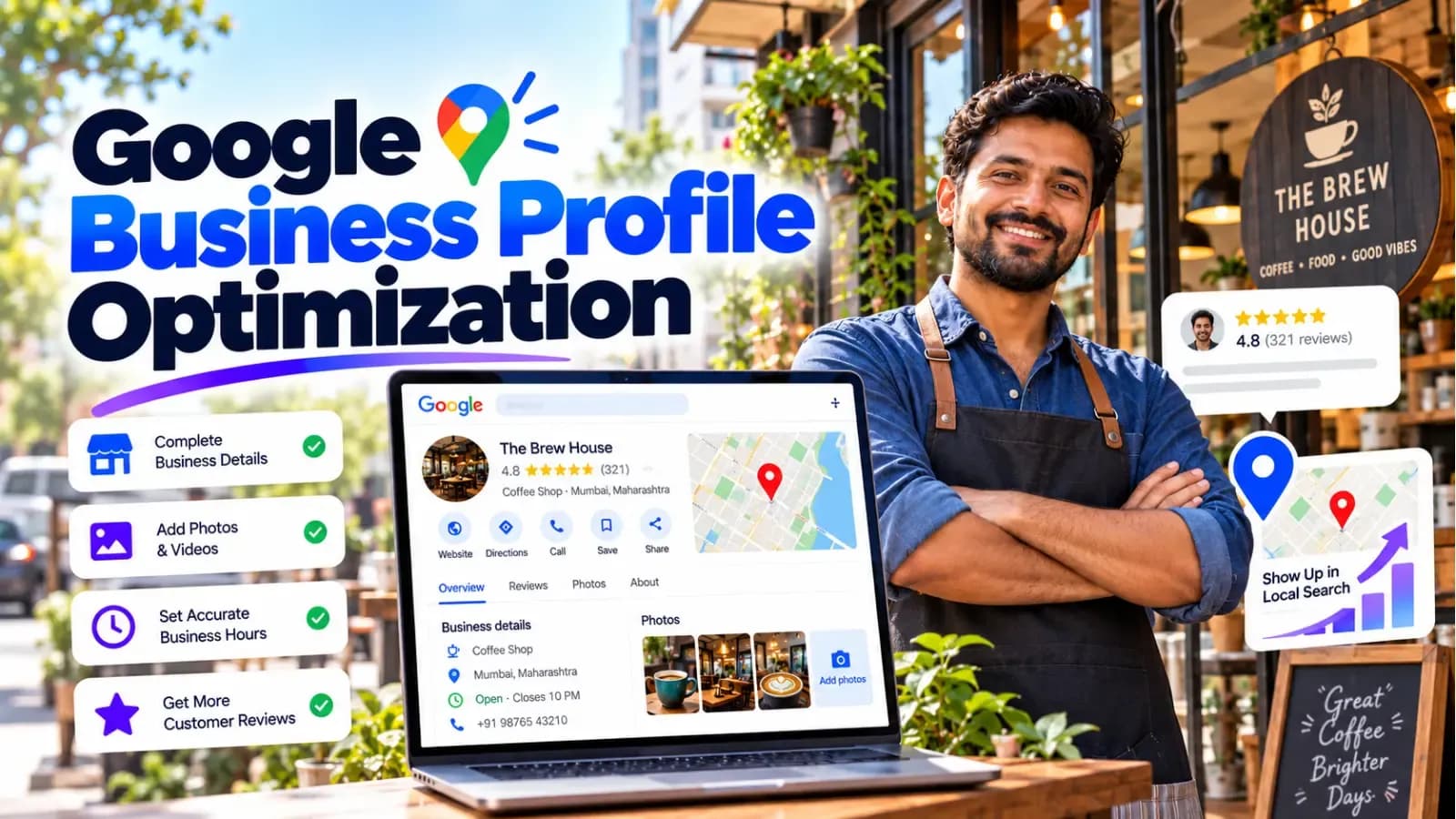
Google Business Profile is a free tool that helps eligible businesses manage their presence on Google Search and Maps.
Start by claiming and verifying your profile, then check that all relevant details are accurate.
Focus on:
- Choosing the most appropriate primary business category.
- Adding your correct business name, address or service area, and phone number.
- Keeping opening hours updated.
- Listing relevant services.
- Uploading genuine business photos.
- Responding professionally to customer reviews.
For example, a home cleaning company should clearly describe its services and specify the areas it genuinely serves.
Avoid adding unnecessary keywords to your business name or creating listings for locations that are not eligible.
2. Conduct Local Keyword Research
Local keyword research helps identify the phrases potential customers use when searching for services.
Begin with your main service, then explore relevant city, neighbourhood, and location-based variations.
For example, a plumbing business might research:
- Plumber in Noida
- Emergency plumber in Noida
- Bathroom repair services in Noida
Use tools such as Google Keyword Planner or Semrush to evaluate relevant search terms.
Choose keywords based on search intent and business relevance, not search volume alone.
Include selected keywords naturally in page titles, headings, service descriptions, and website content.
3. Improve Your Website for Local Searches
Your website should clearly communicate what you offer, where you operate, and how customers can contact you.
Effective local SEO optimization includes:
- Descriptive page titles and headings.
- Accurate contact and service-area information.
- Mobile-friendly layouts.
- Fast, accessible pages.
- Clear enquiry forms and click-to-call buttons.
- Relevant local business structured data where appropriate.
Businesses serving multiple locations can create useful location-specific pages when each page provides genuinely distinct information.
A well-designed website should also help visitors take action. Read UfuqTechs' website conversion optimization guide for related improvements.
4. Build Trust Through Customer Reviews
Authentic customer reviews help potential buyers understand other people's experiences with your business.
Encourage satisfied customers to share honest feedback through your Google Business Profile.
For example, a salon could send customers a polite review request after their appointment.
Respond to positive and negative reviews professionally. Thank customers for their feedback and address concerns respectfully.
Never purchase reviews, offer incentives in exchange for positive ratings, or publish fabricated customer experiences.
Regular review management supports trust and provides useful feedback for improving services.
5. Maintain Consistent Business Listings
Local citations are mentions of your business information across directories, websites, and other platforms.
NAP stands for Name, Address, and Phone Number.
Maintain accurate, consistent information wherever your business appears, including relevant Indian business directories and industry-specific platforms.
If your phone number or address changes, update important listings.
Prioritize reputable, relevant directories rather than submitting your business to hundreds of low-quality websites.
6. Create Useful Local Content
Relevant local content can answer questions your customers actually ask.
A home renovation company in Bengaluru could publish an article about choosing renovation materials for the city's climate.
A clinic could explain appointment preparation or services commonly requested by nearby patients.
Useful articles also create opportunities for content marketing services that support broader organic search strategies.
Build relevant backlinks through genuine partnerships, local associations, useful resources, and legitimate community involvement.
Avoid purchasing manipulative links or publishing repetitive city pages solely to target keywords.
7. Make It Easy for Customers to Contact You
Search visibility becomes more valuable when customers can contact your business without unnecessary steps.
Display a clear phone number, enquiry form, service information, and business hours.
On mobile devices, make contact buttons easy to use.
For businesses managing multiple enquiries, organized follow-up processes can prevent interested customers from being overlooked.
Explore lead generation solutions to understand how customer acquisition and enquiry management can work together.
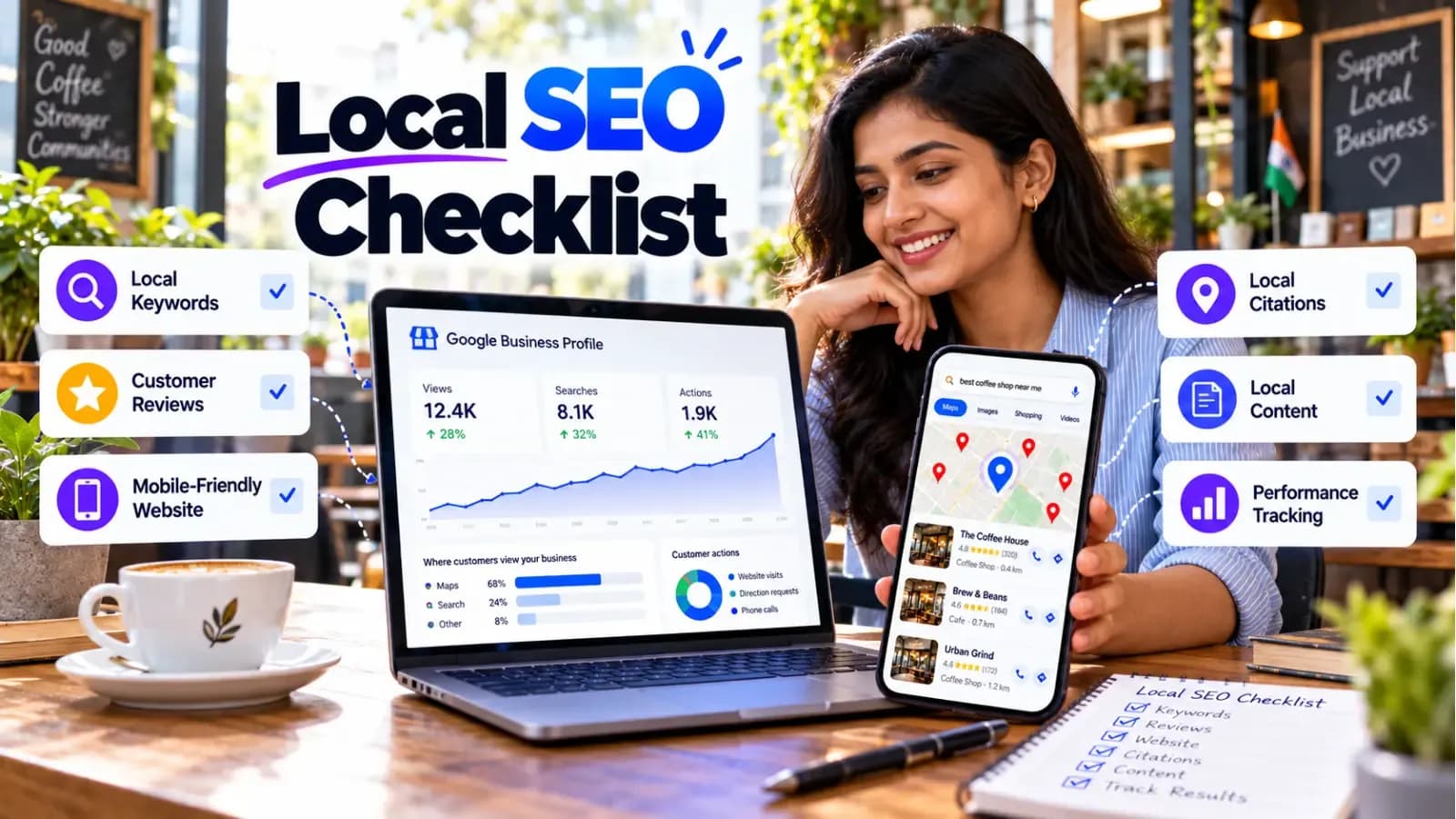
Local SEO Checklist for Small Businesses
Use this practical local SEO checklist to review your online presence.
SEO Task | Action Required | Review Frequency |
Google Business Profile | Verify business details and categories | Monthly or when details change |
Local keywords | Check relevant service and location searches | Quarterly |
Business information | Correct inaccurate listings | When information changes |
Customer reviews | Request genuine reviews and respond | Ongoing |
Website optimization | Check mobile experience and contact forms | Monthly |
Local content | Publish useful location-relevant information | As needed |
Performance tracking | Review visibility, calls, and enquiries | Monthly |
Start with accurate business information and a complete Google Business Profile. Then improve your website, reputation, and content gradually.
Consistency matters more than making numerous changes without measuring their usefulness.
Common Local SEO Mistakes to Avoid
Even basic mistakes can make it harder for customers to discover or trust your business.
Watch out for these issues:
- Incomplete business profiles: Missing details can create confusion for customers.
- Incorrect business categories: Categories should accurately represent your services.
- Inconsistent contact information: Outdated phone numbers and addresses can lead to missed enquiries.
- Keyword stuffing: Repeating location names unnaturally does not make content more helpful.
- Ignoring mobile visitors: Complicated navigation or contact forms can discourage enquiries.
- Fake reviews: Manipulated feedback may violate Google's policies.
- Duplicate location pages: Nearly identical pages without genuine local value are unlikely to help visitors.
The best local SEO tips for small businesses focus on accuracy, usefulness, and maintaining a trustworthy online presence.
How to Measure Local SEO Performance
Improving rankings is useful, but businesses should also understand whether better visibility leads to meaningful customer interactions.
Google Business Profile performance data can show certain interactions, such as calls, website clicks, and direction requests, depending on the business and available reporting.
Google Search Console helps monitor organic search queries, clicks, impressions, and average positions.
Google Analytics 4 can help measure website engagement and configured conversion events.
Review metrics such as:
- Local search visibility.
- Website clicks from relevant searches.
- Customer calls and enquiries.
- Appointment or contact form submissions.
- Qualified leads from organic traffic.
A broader digital marketing strategy can connect these measurements with customer acquisition and business goals.
Remember that more traffic is not necessarily better if visitors are unlikely to become customers.
Final Thoughts
Local SEO for small business is about helping nearby customers find accurate information, understand your services, and contact you confidently.
Begin with your Google Business Profile, improve your website, and consistently monitor customer interactions.
If your business needs help building a practical SEO strategy, book a free strategy call with UfuqTechs to discuss your goals and opportunities.
Frequently Asked Questions
1. Is local SEO worth it for small businesses in India?
Yes, especially for businesses serving customers in specific geographic areas. Local SEO can improve discoverability among people searching for nearby products or services.
2. Can I do local SEO myself?
Yes. Business owners can manage basic tasks such as updating Google Business Profile, checking contact details, and collecting genuine reviews. Technical improvements may require specialist assistance.
3. How long does local SEO take to show results?
There is no guaranteed timeframe. Results depend on competition, business location, website condition, existing visibility, and the work completed. Improvements often require ongoing effort.
4. Is Google Business Profile free?
Yes. Creating and managing an eligible Google Business Profile is free. Businesses may separately pay professionals to help manage or optimize their online presence.
5. Do I need a website for local SEO?
An eligible business can have a Google Business Profile without a website. However, a useful website provides additional opportunities to explain services, attract organic traffic, and receive enquiries.
6. How much do local SEO services cost in India?
Costs vary according to business requirements, competition, locations served, website condition, and service scope. Request a clear proposal explaining deliverables and reporting before choosing a provider.